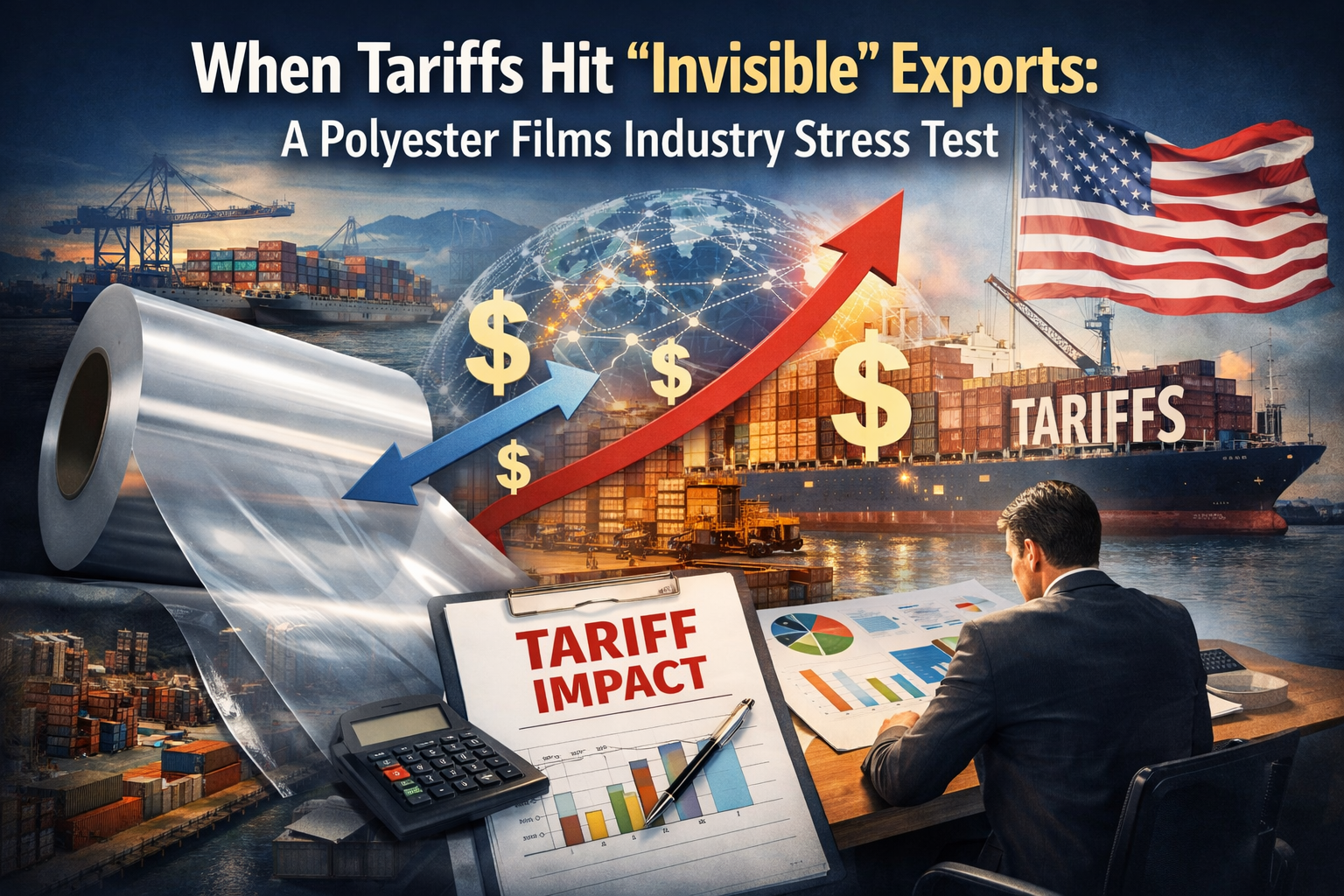
For most consumers, polymer films are a background material. They are the clear, strong layer in flexible packaging, the functional layer in labels, and the performance layer in energy and protection applications. For industrial buyers, they are not background at all. They are a specification driven input with little tolerance for inconsistency in thickness, clarity, tensile strength, barrier properties, and coating performance.
That is why tariff shocks land differently in this industry than in many commodity segments. The product is often a small line item in a customer’s finished good, but it is a high consequence line item. A film that fails in converting, laminating, printing, sealing, or outdoor performance can cause a cascade of rework, rejects, and reputational damage. In tariff regimes, this “high consequence, mid ticket” positioning creates a uniquely contested question: who absorbs the wedge between pre tariff and post tariff landed cost?
What follows is an industry lens on the current US tariff environment, the before and after tariff economics for a key trade slice, and what the next two years could plausibly look like for global supply chains and competitive strategy.
Specialty Polyester Films are “Small Weight, High Leverage”
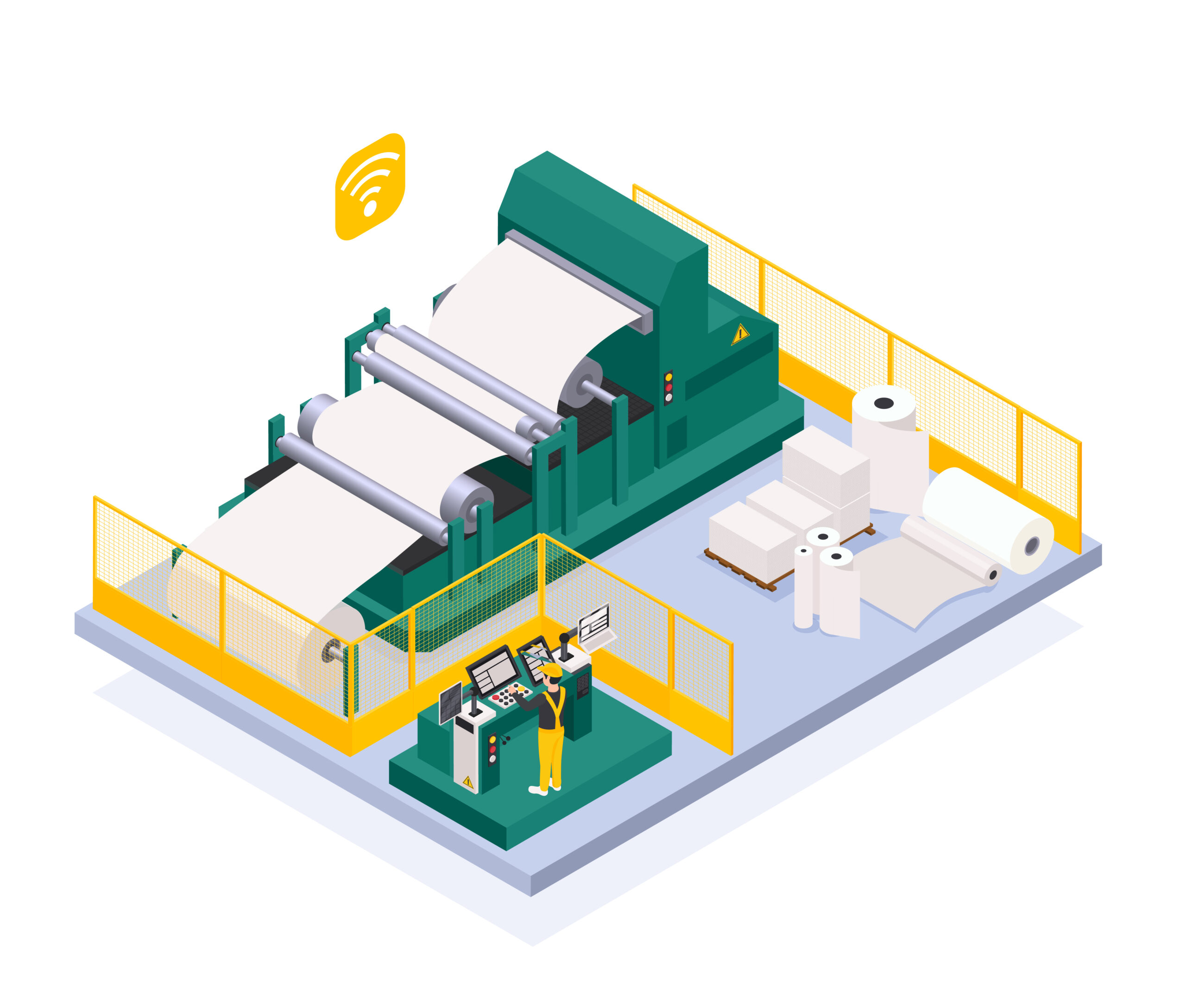
Polyester film (often traded under HS code families that include “other plates, sheets, film, foil and strip of plastics of polyethylene terephthalate”) is used across flexible packaging, industrial lamination, and technical applications. Trade data for one representative category, HS 392062, shows the United States imported about US$ 1.025 billions of this product in 2023. The largest sources included Oman and Mexico, with India at about US$ 40.45 million.
Two implications matter for management teams in this industry
First, the US is a high value market where qualification barriers, customer stickiness, and supplier performance history matter. If you are inside a converter’s approved supplier list, you are harder to displace than in many other plastics categories.
Second, even modest tariff changes can become commercially significant because films are sold on tight spreads, especially where grades are closer to commodity and competition is intense. A sudden increase in ad valorem duties is not simply “passed through” by default. It triggers negotiation about risk sharing and redesign of supply arrangements.
What Changed: From Reciprocal Tariffs to a Higher Duty Regime
In 2025, the United States has moved through a sequence of actions around reciprocal tariff rates, creating a more volatile duty landscape for trading partners. Separately, from 27 August 2025, an additional 25% ad valorem duty on certain imports from India was implemented pursuant to an executive order, taking the combined tariff rate to 50% for covered items.
At an industry level, this matters less as a headline percentage and more as a behavioural trigger in supply chains.
Buyers react quickly when a tariff threatens to reprice a component category overnight. They do not only ask “how much more.” They ask “how long will this last,” “can I source elsewhere,” “can I redesign specifications,” and “what is my contractual protection.” Those questions reshape supplier relationships and, over time, shift global sourcing patterns.
Before Tariffs: A Baseline Snapshot of Trade Flows
The most useful “before tariff” anchor is not a single company’s exports. It is a product market view.
In HS 392062, the US imported US$ 1.025 billion in 2023. India’s US share in that year was roughly US$ 40.45 million. That is large enough to matter to Indian exporters, but also small enough that US buyers have multiple alternate sourcing options across regions, depending on grade and application.
At the macro level, US goods trade with India remains large and growing. The USTR estimates total goods trade (exports plus imports) with India at US$ 128.9 billion in 2024. This backdrop matters because broad trade ties often influence how quickly commercial parties find workarounds, substitutions, or negotiated burden sharing.
After Tariffs: The New Economics of the Landed Cost Wedge
A sharp increase in tariffs introduces a “wedge” between:
- The exporter’s ex works price (plus freight, insurance, and normal costs), and
- The importer’s post duty landed cost.
That wedge must be allocated somewhere. In practice, the allocation typically distributes across four levers.
- Exporter margin compression
Exporters may temporarily absorb part of the duty impact to defend shelf space, preserve long term customer relationships, or prevent competitors from stepping in during a disruption window. This is common when the exporter believes the regime is temporary or expects bilateral negotiations to stabilise.
- Importer or converter pass through
Importers may try to pass the cost forward. This works best when the buyer has strong pricing power, when films are a small portion of total BOM cost, or when switching risk is high due to qualification and performance. In packaging, however, end brands often push back aggressively, especially in consumer categories with tight price points.
- Product mix shift
Suppliers can shift toward higher value grades where the same tariff percentage becomes more “affordable” relative to gross margin dollars. Conversely, buyers can shift toward lower cost grades or alternative structures if product performance allows.
- Supply chain rerouting and substitution
Tariffs accelerate supplier diversification. This is not always simple due to process compatibility, coating chemistries, and print or seal performance, but the incentive becomes large enough to fund requalification programmes.
These levers do not operate in isolation. They compound. If the exporter absorbs early, the buyer takes time to explore alternatives. If alternatives look viable, the buyer gains negotiation power, which increases the pressure on the exporter’s margin. The outcome depends on whether the exporter is “replaceable” by any credible supplier at the buyer’s required grade and volume cadence.
The Two-Year View: What 2026 – 2027 Could Look Like
Projecting tariff regimes is risky. However, we can build disciplined scenarios using global trade institutions’ assessment of tariffs and uncertainty.
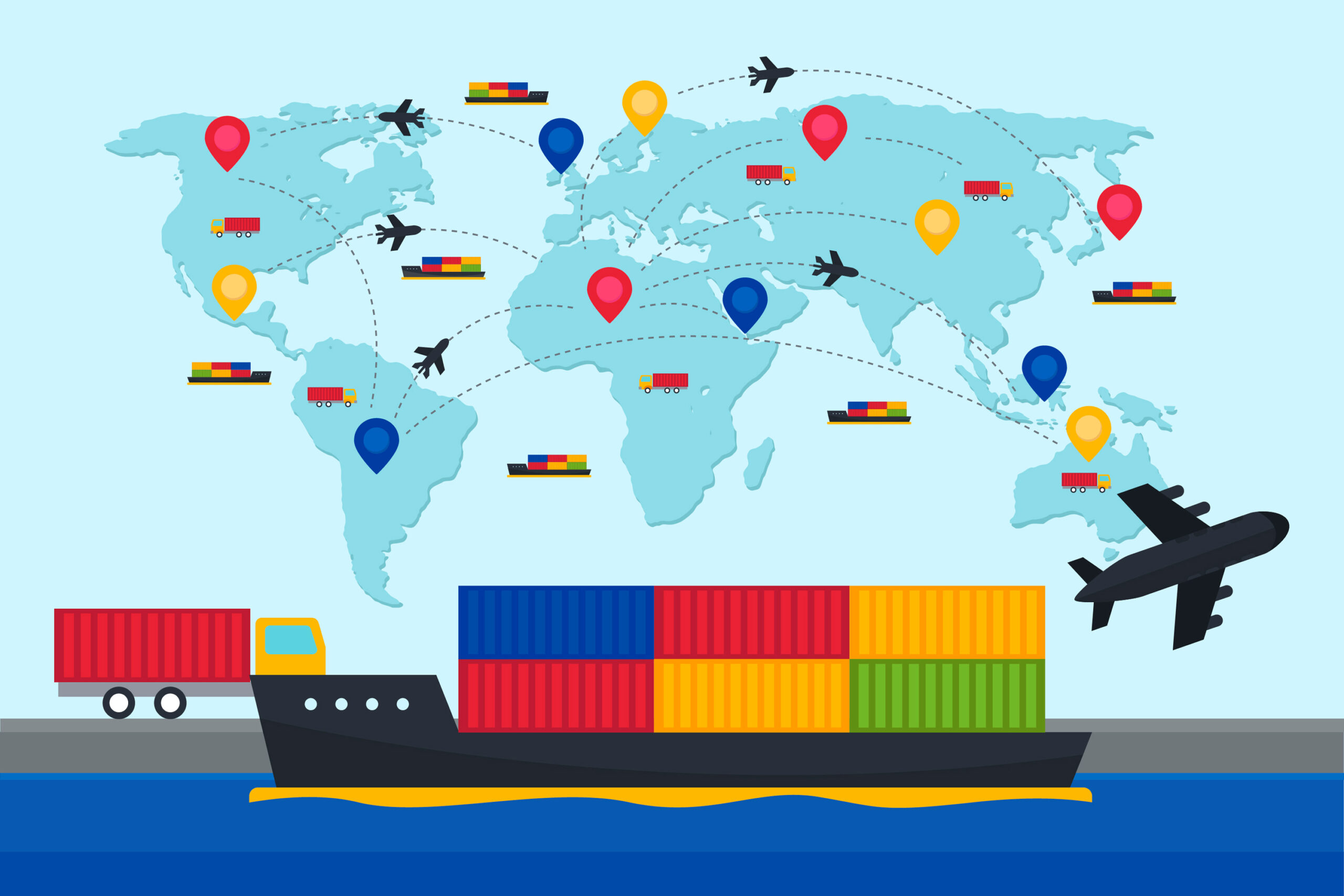
The WTO has explicitly modelled how reciprocal tariffs and trade policy uncertainty can depress world merchandise trade. In its 2025 outlook analysis, the WTO notes that reciprocal tariffs and spreading trade policy uncertainty together would lead to a decline in world merchandise trade in 2025, highlighting the systemic drag from tariff shocks and uncertainty. A later 2025 WTO update also flags weaker prospects for the second half of 2025 and 2026, citing higher tariffs and persistent uncertainty, with frontloading expected to unwind. UNCTAD similarly points to trade policy uncertainty escalating to unprecedented levels and warns that sudden shifts in US trade policy can reverberate across global value chains.
Against that backdrop, for specialty polyester films, a practical two-year view typically clusters into three scenarios.
Scenario A: Tariff Normalization with “Residual Friction”
Tariffs ease from peak levels, but do not revert fully to the old baseline. Buyers preserve diversification moves made during the shock, which means the old supplier concentration does not come back automatically. Industry outcome: volumes stabilise, but share patterns permanently shift.
Scenario B: Tariffs Persist long enough to Trigger Structural Reallocation
If the post tariff regime remains in place through multiple contracting cycles, buyers will invest in alternate sources and requalification. This is consistent with broader evidence on supply chain reconfiguration and trade reallocation under fragmentation shocks. Industry outcome: new “preferred corridors” emerge (for example, Gulf producers, Mexico, or other Asia), and some Indian capacity pivots more aggressively to non-US markets.
Scenario C: A Stop Start Regime that Converts Tariffs into a Permanent Management Discipline
Even if tariffs change, the volatility itself becomes the enduring problem. Companies treat tariff risk as a recurring feature, not an event. Industry outcome: more flexible contracting, more regional inventory buffers, and an explicit policy on country concentration risk.
The Supply Chain Ripple: How Tariffs Rewire Global Flows
Tariffs on finished films do not stop at the film stage. They transmit upstream and downstream.
Upstream: Resin and Additives
Polyester film economics are sensitive to resin pricing, energy costs, and conversion yields. When trade friction rises, producers re-optimize plant loading and grade mix. That can change demand patterns for certain resins and coatings.
Midstream: Converters, Laminators, and Distributors
Converters often face the hardest operational challenge. They must keep customer supply continuity while managing requalification risk. In a tariff shock, distributor behavior can change quickly, with stock positions frontloaded or de risked depending on expectations of further policy moves.
Downstream: Packaging, Building Materials, Automotive, Electronics
Where films are used for energy control, protection, and building efficiency, demand can be influenced by climate and energy cost dynamics as well. For example, high UV exposure markets create sustained demand for protective and performance films. Australia’s radiation agencies note Australia experiences some of the highest levels of solar UV radiation globally due to geography and seasonal factors. This is one reason “non-US” market development is not only a defensive move; in some segments it can be an offensive growth play.
The point is not that high UV markets automatically replace US volumes. The point is that tariffs raise the strategic value of a broader market portfolio, including regions where application driven pull factors are structurally strong.
Five Strategic Stances the Industry can Adopt
Across the industry, most competitive responses fall into five stances. They can be combined, but it helps leadership teams articulate which stance they are prioritising.
- The Relationship Defender
Absorb part of the tariff wedge to protect strategic accounts, backed by tight cost control, productivity improvements, and a disciplined definition of “strategic account.” This stance assumes the tariff regime normalizes or becomes negotiable.
- The Portfolio Balancer
Accelerate penetration in non-affected markets and reduce country concentration risk over time, while maintaining a “minimum defensible presence” in the affected market. This stance explicitly treats market diversification as risk management, not just growth.
- The Value Upgrader
Move the mix toward high-performance grades, coatings, and application engineered solutions where the ability to command premium pricing is higher and switching barriers are stronger. This stance treats tariffs as a forcing function to escape pure price competition.
- The Footprint re-Architect
Reconfigure supply routes and, where feasible, manufacturing or finishing footprints to remain close to the demand market or to route through less impacted corridors. This stance is complex and capital intensive, but can become necessary if tariffs persist.
- The Flexibility Builder
Design commercial and operating models that can scale up or down without creating stranded capacity risk. In practice, this often means modular capacity, variable cost structures, and a more deliberate make-buy balance for select grades or steps.
The most robust companies do not pick only one. They sequence them: defend relationships now, rebalance portfolio over 12–24 months, and upgrade value and flexibility over the next cycle.
Why this is also an Operating Model and HR Issue
Tariff shocks look like trade policy problems. In reality, they expose operating model weaknesses.
To execute any of the stances above, firms need faster decision rights, better market intelligence, sharper cost transparency by grade and customer, stronger key account management, and more disciplined scenario planning. These are organisational capabilities, not just commercial tactics.
In other words, the firms that “win” are often the ones that can execute a cross functional response quickly: commercial, supply chain, finance, legal, and plant operations. That is why HR optimisation and operating effectiveness become unusually relevant in tariff regimes. The tariff is the trigger. Organisational responsiveness is the differentiator.
What to Track: A Practical Board Pack for Tariff Volatility
If the industry treats tariffs as a recurring feature, leadership teams should monitor a small set of indicators with discipline.
- Country and customer concentration ratios (revenue and contribution)
- Gross margin bridge by region (price, duty, freight, mix)
- Requalification pipeline (customers, grades, timelines)
- Order frontloading and inventory weeks (by market)
- Contract structure mix (fixed price, indexed, tariff pass through clauses)
This is not complexity for complexity’s sake. It is about seeing early whether the organisation is defending share at the cost of future profitability, or whether diversification is real rather than aspirational.
Tariffs as a Regime, Not an Episode
The headline is a tariff percentage. The real story is what tariffs do to behaviour: sourcing diversification, pricing discipline, contract redesign, product mix shifts, and supply chain reconfiguration under uncertainty.
Global institutions have repeatedly flagged that trade policy uncertainty and higher tariffs reshape trade flows and supply chains, with effects that persist beyond the immediate policy action. For the polyester films industry, that means the competitive advantage increasingly belongs to players that are operationally agile, commercially sophisticated, and structurally diversified across markets.
Those traits are not accidental. They are designed, measured, and reinforced through the operating model.
How Hmsa can Help
If you are a polyester films manufacturer, speciality coatings player, converter, packaging platform, or investor facing heightened US tariff exposure, Hmsa Consultancy can help you convert trade disruption into a defensible commercial and operating plan. Our support typically spans:
- Diagnosing tariff exposure at SKU, grade, and customer level by building a landed-cost and margin bridge across price, duty, freight, mix, and rebates
- Defining the right commercial stance by account, including negotiation playbooks, pricing corridors, and contract structures such as indexation and tariff pass-through clauses
- Designing a diversification roadmap covering alternate geographies, corridors, and customer segments, supported by a structured requalification pipeline and timelines
- Shaping product mix strategy toward higher value grades and application engineered solutions where switching barriers are higher and tariff impact is more manageable
- Upgrading the operating model for faster response by clarifying decision rights, strengthening key account governance, tightening cost transparency by grade, and institutionalizing scenario planning and board pack KPIs
The objective is to ensure you do not treat tariffs as a short-term pricing problem, but as a strategic and execution challenge requiring disciplined margin protection, market portfolio resilience, and an operating model built for volatility.