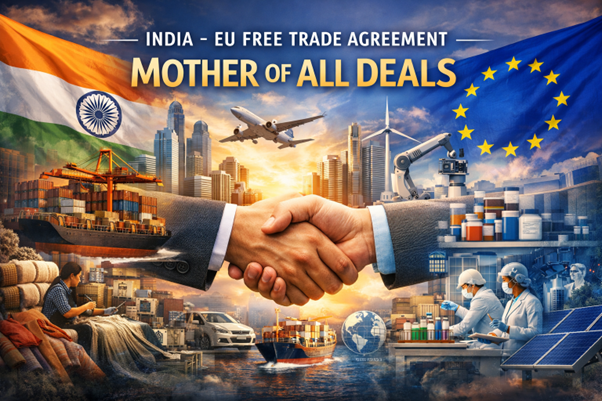
What the India – EU Free Trade Agreement really means for Indian businesses, and how to position for it
For nearly two decades, the India – European Union Free Trade Agreement (India – EU FTA) has existed more as a diplomatic aspiration than a commercial reality. That appears to be changing.
With negotiations entering their final stretch, political signaling from both sides has grown unusually emphatic. The President of the European Commission has publicly described this agreement as the “mother of all deals.” That description is not rhetorical flourish. It reflects the sheer economic scale, strategic depth, and rule-setting ambition embedded in the proposed agreement.
For Indian businesses, this is not merely another tariff-cutting exercise. It is a structural reset of how India integrates with one of the world’s most demanding, high-value markets.
Why this Deal is Fundamentally Different
Three characteristics distinguish the India – EU FTA from India’s earlier trade agreements.
First, scale. The EU represents 27 countries, one of the largest unified consumer markets globally, with deep purchasing power, mature institutions, and long-term demand stability. Access to this market at preferential terms changes export economics in a way few bilateral agreements can.
Second, depth. This agreement goes far beyond goods. Services, investment protection, public procurement, sustainability, standards, digital trade, and regulatory cooperation are all central pillars. In effect, it is about aligning operating systems, not just lowering border taxes.
Third, standards as strategy. The EU does not trade by price alone. It trades by rules, traceability, compliance, and enforceability. The India – EU FTA is as much about embedding Indian businesses into European compliance architectures as it is about market access.
That is why the opportunity is large, but not automatic.
What Indian Businesses Should Broadly Expect
At a high level, Indian companies should prepare for four simultaneous shifts:
- Tariff advantages will exist, but only for those who qualify cleanly
Rules of origin, documentation discipline, and customs compliance will decide who can actually use the FTA benefits. - Non-tariff barriers will matter more than tariffs
Standards, certifications, audits, sustainability disclosures, and carbon accounting will increasingly shape competitiveness. - Services and people movement will improve, but selectively
Expect incremental progress rather than open mobility. Firms with structured global delivery models will benefit most. - Compliance will become a competitive weapon, not a cost
Companies that internalize EU requirements early will crowd out slower, informal competitors.
Sector-wise Outlook: Who Benefits Most and Why
1. IT and Digital Services
Why the opportunity is real
Europe’s digital transformation agenda, ageing population, and skills shortages create sustained demand for IT services, engineering support, data services, and digital platforms.

Who benefits most
- Firms with mature data governance and cybersecurity frameworks
- Companies already operating through European subsidiaries or delivery centres
- Providers offering high-value services such as cloud migration, AI enablement, platform engineering, and managed services
Strategic positioning required
- Align internal data practices with EU privacy and digital compliance expectations
- Reduce dependency on short-term visas by strengthening near-shore and on-shore delivery models
- Move up the value chain from cost arbitrage to outcome-based contracts
2. Non-IT Services (Engineering, Consulting, Logistics, Managed Services)
Why the opportunity is understated
Public procurement access, infrastructure services, and regulated professional services are often overlooked but can be transformative.

Who benefits most
- Strategy Consulting, design, and professional services firms with certified talent
- Engineering and EPC firms with international credentials
- Logistics, warehousing, and supply-chain service providers embedded in manufacturing ecosystems
Strategic positioning required
- Invest in credential recognition, certifications, and EU-compatible governance
- Build consortium-based bidding capabilities for public projects
- Treat Europe as a long-term operating market, not a remote export destination
3. Manufacturing and Industrial Exports
Why this is a structural opportunity
European firms are actively diversifying supply chains. India is no longer competing only on cost, but on reliability, scale, and geopolitics.
Who benefits most
- Auto components, engineering goods, machinery, and specialty chemicals
- Firms with stable quality systems and export discipline
- Companies willing to invest in green manufacturing pathways
Strategic positioning required
- Embed EU standards into product design, not as an afterthought
- Strengthen traceability across the supply chain
- Prepare for carbon cost visibility and sustainability disclosures
4. Pharmaceuticals and Life Sciences
Why this is both an opportunity and a risk zone
Europe values India as a reliable generic supplier, but regulatory and IP sensitivities remain high.

Who benefits most
- Large, well-governed pharma companies with regulatory depth
- Firms with strong compliance, pharmacovigilance, and audit readiness
- Players moving into complex generics, biosimilars, and contract manufacturing
Strategic positioning required
- Closely monitor final legal text on IP, data protection, and border measures
- Invest in regulatory engagement, not just manufacturing scale
- Treat Europe as a premium, compliance-led market, not a volume dump
5. Sustainability, ESG, and Compliance Services (the hidden winner)
Every exporter to Europe will need support. That creates an entire secondary market.
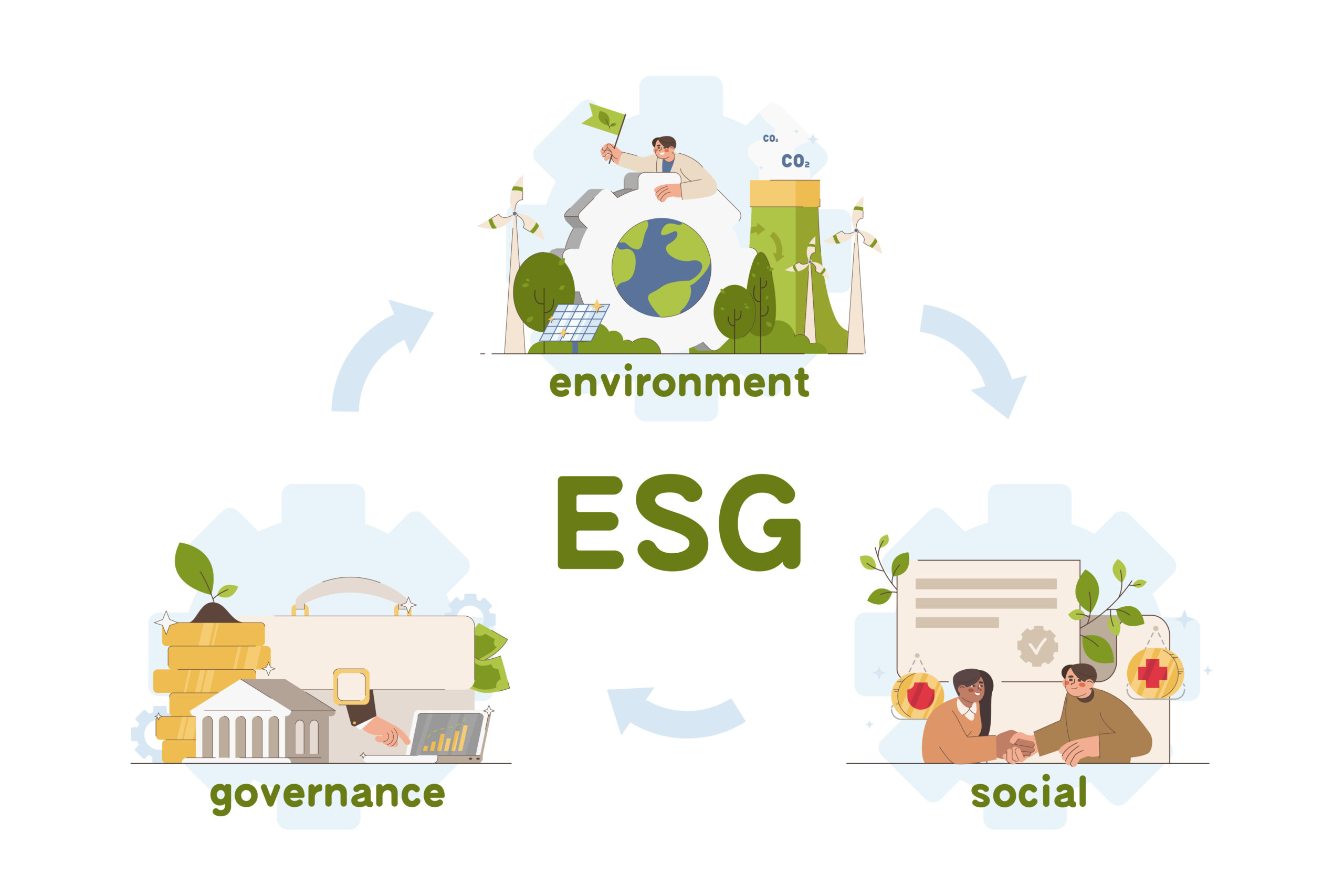
High-potential domains include
- Product testing and certification
- ESG reporting and carbon accounting
- Supply-chain traceability solutions
- Compliance advisory and audit services
For Indian firms operating in these areas, the India – EU FTA is a demand multiplier.
The defining question for Indian promoters
The real divide will not be between exporters and non-exporters.
It will be between businesses that treat the FTA as a transactional opportunity and those that treat it as a strategic transformation trigger.
The first group will chase tariff reductions and struggle with compliance friction.
The second group will redesign operations, governance, and market strategy around European expectations and capture disproportionate value.
How Indian Businesses Should Act Now
- Do not wait for the final text
The direction of travel is already clear. Waiting for certainty will mean losing first-mover advantage. - Conduct an “EU-readiness diagnostic”
Assess tariffs, standards, data practices, sustainability exposure, and organizational capability. - Invest ahead of demand
Certifications, systems, and compliance capacity take time. Early investment compounds. - Think ecosystem, not standalone
Partnerships, joint ventures, and European presence will matter more than solo exporting.
Our Perspective
The India – EU Free Trade Agreement is being called the “mother of all deals” because it is not just about trade volumes. It is about who gets to participate in the next generation of global value chains.
For Indian businesses willing to professionalize, standardize, and think long-term, this agreement could be a once-in-a-generation inflection point.
For those who remain cost-led and compliance-reactive, it may quietly pass them by.
The deal will not create winners.
It will reveal them.
Trade agreements do not create value by themselves. Businesses that prepare early, redesign operating models, and align to new rules capture disproportionate advantage. Hmsa Consultancy supports Indian companies in assessing readiness, repositioning strategy, and building execution roadmaps for complex cross-border market shifts.
hmsaconsultancy.com I contactus@hmsaconsultancy.com I +91 84335 49944
Reference: Economics Times