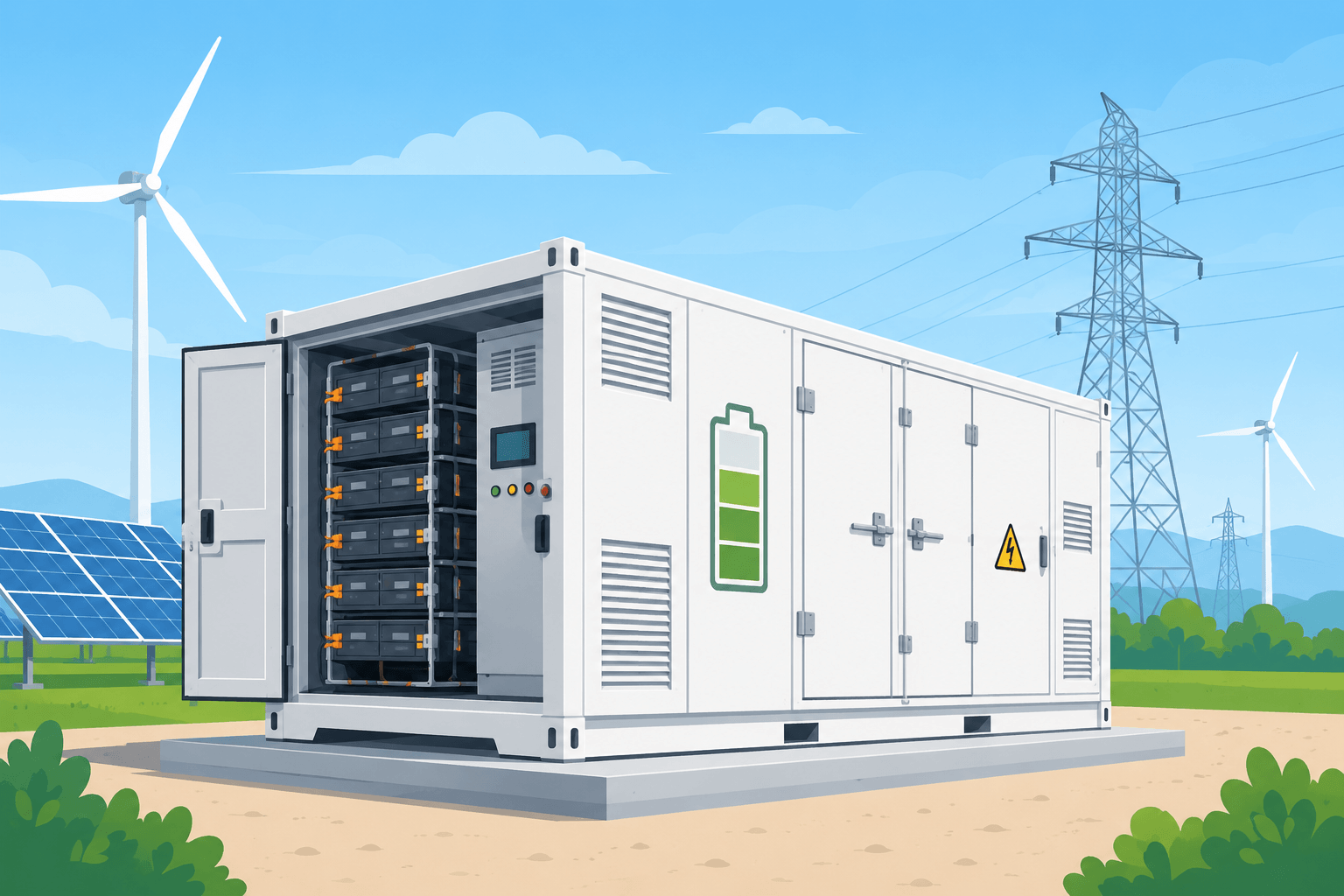
Battery Energy Storage Systems, commonly known as BESS, are becoming an important part of modern electricity infrastructure. As power systems integrate more renewable energy, manage higher peak demand, and move towards greater grid flexibility, BESS is emerging as one of the most practical solutions for storing electricity and supplying it when required.
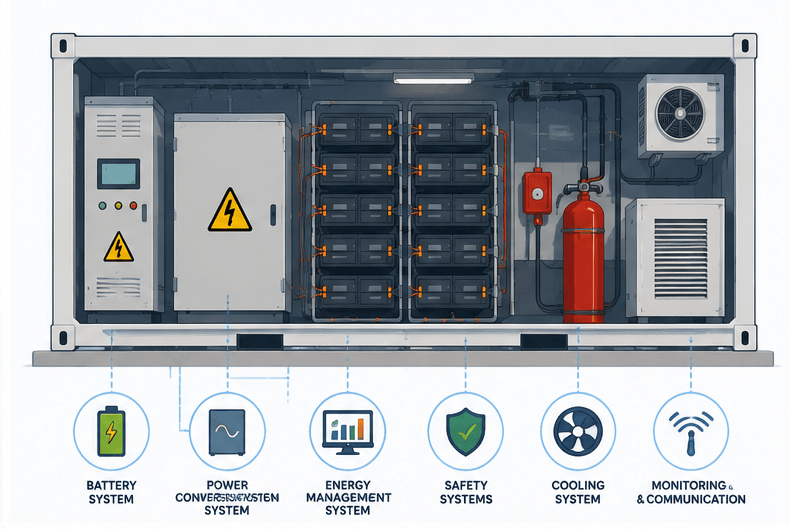
A BESS stores electricity when power is available, surplus, or economically attractive, and releases it when demand increases or the grid requires support. However, a BESS is not just a large battery. It is an integrated energy infrastructure system comprising battery cells, modules, racks, containers, power conversion systems, software, cooling systems, transformers, switchgear, metering, protection equipment, fire safety systems, civil infrastructure, and grid interface arrangements.
This makes BESS relevant not only for renewable energy developers, but also for utilities, commercial and industrial consumers, data centres, telecom infrastructure, large campuses, and investors evaluating opportunities across the energy storage value chain.
Why Battery Energy Storage System is Becoming Important
The traditional electricity system was largely built around predictable generation from thermal, hydro, nuclear, and gas-based power plants. Renewable energy has changed this structure. Solar generation is available mainly during the day, wind generation varies with weather conditions, and peak demand may occur when renewable generation is not fully available.
This creates a growing requirement for flexible assets that can respond quickly. BESS helps by storing electricity during periods of surplus generation and releasing it during periods of high demand, grid stress, or low renewable availability. It can also support frequency regulation, renewable energy firming, peak shaving, grid balancing, reserve support, and backup power applications.
In India, the need for energy storage is becoming increasingly material. MNRE’s energy storage overview refers to the Central Electricity Authority’s National Electricity Plan, which projects India’s storage requirement at 82.37 GWh by 2026–27 and 411.4 GWh by 2031–32, including 236.22 GWh from BESS by 2031–32.
The policy direction is also becoming clearer. The Ministry of Power’s National Framework for Promoting Energy Storage Systems notes that Energy Storage Systems have been recognized as part of the power system under the Electricity Rules, and may be used independently or with generation, transmission, and distribution assets.
What a BESS Actually Includes
A BESS may appear from the outside as a set of containerised battery units installed at a project site. In reality, each project involves several interdependent components that must work together safely and reliably.
Battery System
The battery system is the core storage unit. It generally consists of cells, modules, racks, and containers. These batteries store electricity in direct current form. Lithium-ion batteries, particularly lithium iron phosphate batteries, are widely used in grid-scale applications because they offer a favourable combination of safety, cost, performance, and cycle life.
The choice of battery chemistry affects project cost, usable capacity, degradation profile, safety design, warranty terms, and long-term operating performance.
Battery Management System
The Battery Management System, or BMS, is the monitoring and protection layer of the battery system. It tracks parameters such as voltage, current, temperature, state of charge, and state of health. Its role is to ensure that the battery operates within defined safety and performance limits.
A well-designed BMS is critical because battery performance and safety depend heavily on controlled operation. Poor monitoring can affect efficiency, reliability, life, and safety.
Power Conversion System
The Power Conversion System, or PCS, is the bridge between the battery and the electricity grid. Batteries store power in DC form, while the grid operates in AC form. The PCS converts power in both directions.
During charging, it converts AC electricity into DC electricity for storage in the battery. During discharge, it converts stored DC electricity back into AC electricity suitable for grid supply or consumer use.
The PCS also influences response time, efficiency, grid compatibility, and the ability of the BESS to provide services such as frequency regulation and voltage support.
Energy Management System
The Energy Management System, or EMS, provides the operating intelligence of the BESS. It determines when the system should charge, discharge, remain idle, or provide grid support.
Depending on the project model, the EMS may operate based on grid instructions, renewable generation patterns, time-of-day pricing, contractual obligations, availability commitments, or internal dispatch logic. In more advanced applications, EMS software can become a major differentiator because it directly affects commercial performance.
Balance of Plant
A BESS also requires transformers, switchgear, protection relays, metering systems, SCADA, communication systems, auxiliary power systems, cooling systems, fire detection and suppression systems, civil foundations, access roads, drainage, fencing, and control rooms.
These elements are sometimes treated as supporting infrastructure, but they are central to project reliability, safety, grid approval, and bankability. A BESS project can face significant implementation risk if these items are treated as secondary items during planning.
How a BESS Works
A BESS generally operates in three broad stages: charging, storing, and discharging.
- Charging Stage: Electricity is drawn from the grid, a renewable energy plant, or another power source. The PCS converts this electricity from AC to DC, and the battery system stores the energy. The BMS monitors the charging process to keep the battery within safe operating limits.
- Storage Stage: Energy remains stored in the battery until required. Thermal management, monitoring, fire safety, and control systems continue to operate in the background to maintain safe conditions.
- Discharge Stage: The stored DC electricity is converted back into AC electricity by the PCS. The transformer steps up the voltage where required, and the power is supplied to the grid or to a connected consumer. The EMS controls this process based on the intended use case.
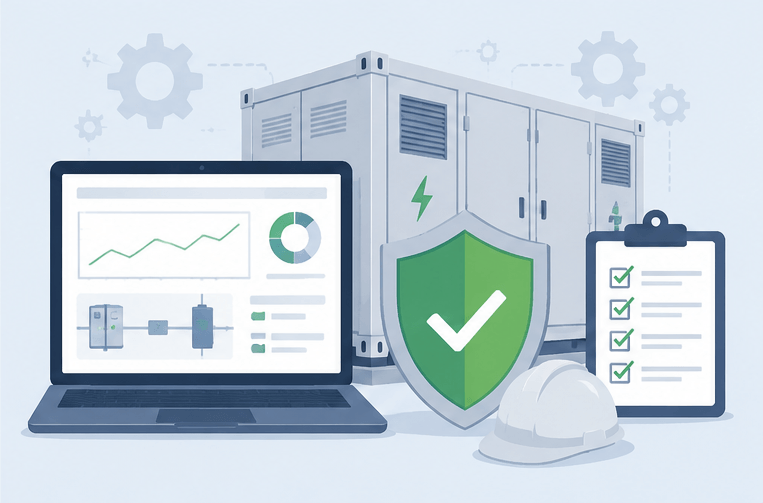
The ability to respond quickly is one of the major strengths of BESS. Unlike many conventional generation assets, battery systems can respond within seconds or milliseconds, making them suitable for applications that require fast grid support.
Key Use Cases of BESS
BESS can be used in several ways depending on project design, location, contractual structure, and grid requirements.
- Renewable Energy Integration: BESS helps smoothen fluctuations in solar and wind generation. It can store surplus solar energy during the day and discharge it in the evening when demand rises.
- Peak Shaving: BESS reduces maximum power draw during peak demand periods. This can be useful for industrial consumers, distribution utilities, commercial buildings, and large campuses.
- Frequency Regulation: BESS responds rapidly to grid frequency deviations and supports system stability.
- Energy Arbitrage: BESS charges when electricity prices are low and discharges when electricity prices are high. This use case is more relevant where time-of-day tariffs, market-based power procurement, or merchant power trading mechanisms are available.
- Grid Support Applications: BESS may provide reserve capacity, voltage support, congestion relief, black start support, and local reliability support, subject to system design and regulatory permissions.
The Emerging BESS Market in India
The Indian BESS market is moving from early-stage interest to project-level implementation. Utility-scale projects are being evaluated and deployed by renewable energy developers, transmission utilities, distribution companies, and independent storage developers. These projects are generally used for renewable integration, peak supply, grid flexibility, and ancillary services.
The Government of India has also approved a Viability Gap Funding scheme for BESS projects. The original scheme envisaged development of 4,000 MWh of BESS projects by 2030–31 with financial support of up to 40 percent of capital cost. More recent government communication has referred to lower VGF per MWh in light of falling BESS costs, indicating that project economics are evolving as technology costs decline.
Commercial and industrial users are also beginning to evaluate BESS for energy cost optimisation, renewable energy integration, diesel generator reduction, and reliability improvement. Telecom towers, hospitals, data centres, logistics parks, industrial campuses, and remote infrastructure sites can also become important users of battery storage where power reliability is critical.
Globally, the International Energy Agency has highlighted the importance of batteries in secure energy transitions and renewable integration. It notes that scaling battery storage is critical to supporting the tripling of renewable energy capacity by 2030.
| Planning to enter the BESS value chain, develop a storage project, or evaluate a BESS-linked investment opportunity? Before committing capital, selecting technology, finalizing a project model, or responding to a tender, it is important to assess technical configuration, grid connectivity, revenue model, degradation risk, safety architecture, policy support, and long-term financial viability. Hmsa Consultancy Services supports such decisions through feasibility studies, project reports, market assessment, financial evaluation, value chain opportunity assessment, and strategic advisory aligned to real investment and execution requirements. Share your requirements with us here. |
Business Opportunities Across the BESS Value Chain
The BESS opportunity is broader than battery manufacturing alone. It includes multiple layers of participation across the value chain.
Key opportunity areas include:
- Cell Manufacturing
- Battery Module and Rack Assembly
- Containerized BESS Integration
- PCS and Inverter Systems
- EMS and Control Software
- EPC and Project Execution
- Utility-scale Project Development
- Commercial and Industrial Storage Solutions
- Operations and Maintenance
- Fire safety, Thermal Management, and Auxiliary Systems
- Battery Recycling and Second-life Applications
- Project Financing and Commercial Structuring
For new entrants, the most attractive opportunity may not necessarily be battery cell manufacturing. Cell manufacturing is capital-intensive, technology-heavy, and dependent on raw material supply chains. Other opportunities may exist in system integration, container assembly, EPC execution, C&I storage solutions, O&M services, EMS platforms, and project development under BOO or similar models.
This makes BESS a multi-layered market rather than a single-product market. Different players can participate at different levels depending on their capital strength, technical capability, market access, risk appetite, and ability to manage long-term performance obligations.
Key Challenges in BESS Projects
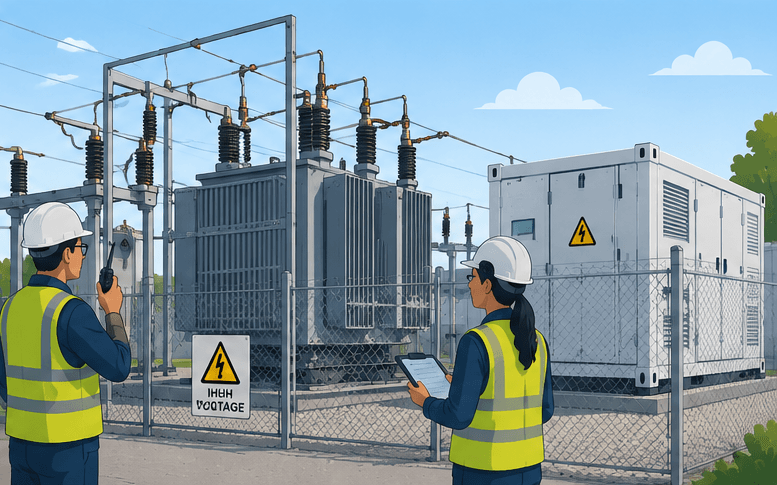
While the market opportunity is significant, BESS projects require careful technical, commercial, financial, and regulatory evaluation. Businesses planning to develop or invest in BESS projects may face several critical challenges, including battery degradation, safety requirements, commercial viability, grid connectivity, vendor warranties, lifecycle performance, financing assumptions, and regulatory clarity.
These challenges can materially affect project structuring, capital cost, operating performance, lender comfort, and long-term returns. A BESS project therefore needs to be assessed not only from the perspective of equipment procurement, but also from the standpoint of project viability, risk allocation, implementation readiness, and lifecycle performance.
We will discuss these challenges in detail in the next article of this series: Challenges in BESS Project Execution in India: Why BESS Consultants Matter
How Hmsa Consultancy Services can Support BESS-Related Decisions
BESS projects require a combination of market understanding, technical configuration, regulatory assessment, commercial structuring, and financial evaluation. For businesses and investors, the key question is not only whether the BESS sector will grow, but where and how to participate in the value chain.
Hmsa Consultancy Services can support clients in evaluating BESS opportunities through structured advisory work covering:
- Market and opportunity assessment across utility-scale, C&I, renewable integration, grid support, and captive reliability applications
- BESS value chain evaluation to identify suitable participation models such as project development, system integration, EPC, O&M, container assembly, EMS software, or component supply
- Feasibility studies and project reports for BESS investments, including technical assumptions, commercial model, CAPEX, OPEX, revenue logic, and financial viability
- Tender and bid advisory for BESS BOO, BOT, renewable-plus-storage, and utility procurement opportunities
- Technology and vendor assessment, including battery chemistry, PCS, EMS, warranty terms, degradation profile, safety systems, and lifecycle performance
- Risk assessment covering degradation, augmentation, safety, grid connectivity, regulatory approvals, contractual obligations, and lender considerations
This support is particularly relevant where clients need to move from broad sector interest to a practical investment decision, tender response, project report, or implementation roadmap.
Conclusion
BESS is becoming a critical infrastructure solution for modern electricity systems. Its relevance is increasing because renewable energy growth, grid flexibility requirements, peak demand management, and reliability needs are reshaping how electricity systems are planned and operated.
However, BESS should not be viewed merely as a battery purchase. A successful project requires appropriate technology selection, reliable power conversion, strong safety design, realistic degradation assumptions, robust financial modelling, clear contractual structuring, and careful grid integration.
For investors and businesses, the opportunity lies in identifying the right point of participation in the BESS value chain. Some may choose project development. Others may focus on integration, software, EPC, O&M, or component supply. The stronger opportunities are likely to emerge where technical understanding is combined with commercial discipline and execution capability.
As India’s energy storage requirement expands, BESS will increasingly become a central part of renewable energy integration, grid modernisation, and power reliability planning. Businesses that evaluate the opportunity with sufficient diligence will be better positioned to participate in this evolving market.