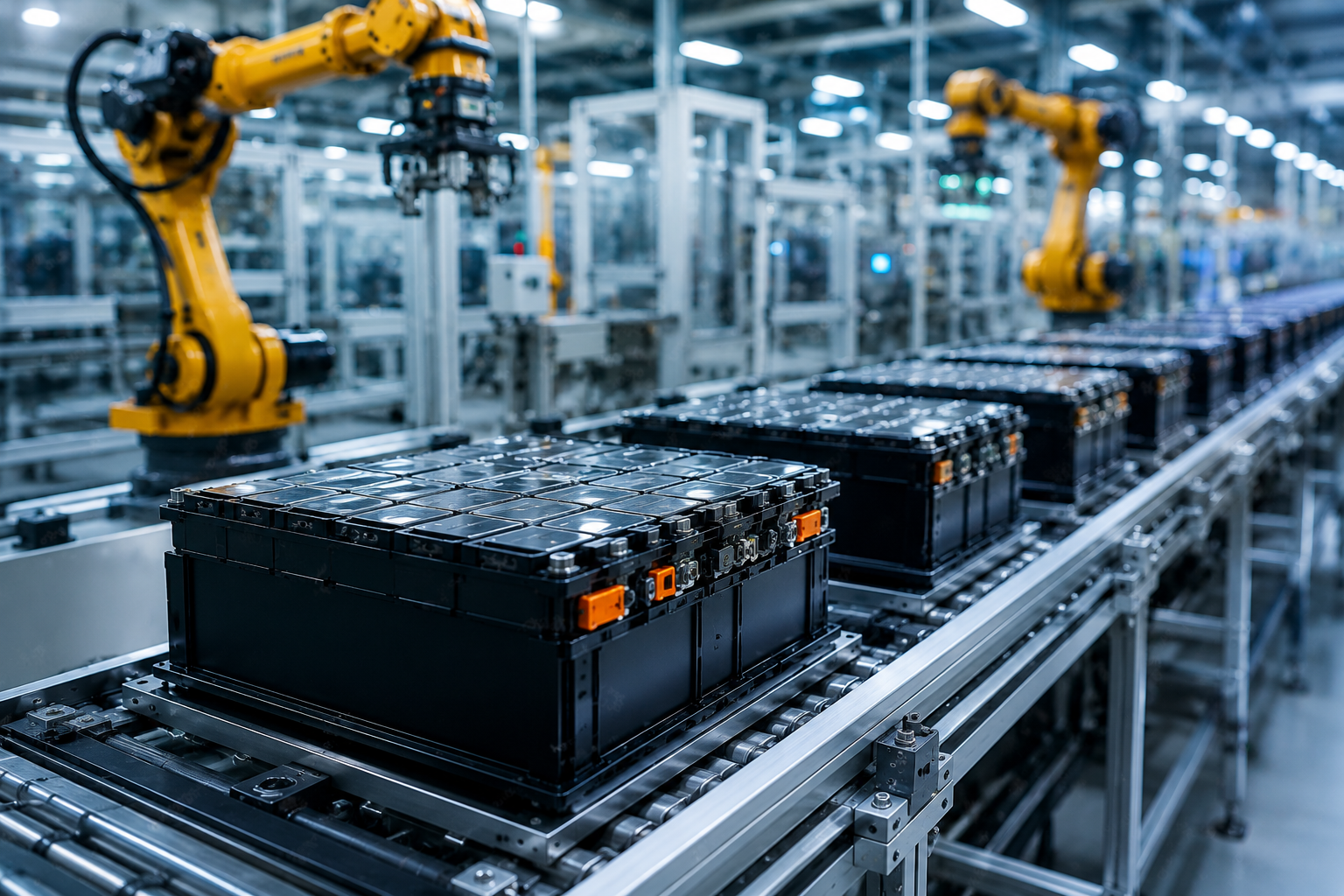
India’s battery manufacturing policy appears to be entering its next phase. After supporting Advanced Chemistry Cell (ACC) manufacturing through the ACC PLI framework, the policy focus may now expand towards deeper localisation of battery components and materials.
Recent reports indicate that the Government is preparing an incentive scheme of around ₹12,000 crore to encourage domestic manufacturing of critical battery components. The reported focus areas include Cathode Active Materials (CAM), Anode Active Materials (AAM), copper foil, electrolytes, separators and other inputs that are essential to advanced battery manufacturing.
This is a significant development because battery manufacturing is not limited to assembling cells or packs. A competitive battery ecosystem requires control over materials, components, processing capabilities, quality systems, testing infrastructure and supply chain reliability. Without these elements, domestic cell manufacturing may remain dependent on imported inputs, limiting value addition and exposing manufacturers to supply shocks, price volatility and external technology dependence.
The Existing PLI Scheme for ACC
India already has a Production Linked Incentive scheme for Advanced Chemistry Cell battery storage. The scheme was approved with an outlay of ₹18,100 crore to support 50 GWh of domestic ACC manufacturing capacity. Its objective is to strengthen India’s battery manufacturing capability, support electric mobility and energy storage, and encourage domestic value addition.
However, cell manufacturing capacity alone does not complete the value chain. A cell plant requires reliable access to processed and specification-compliant inputs. For lithium-ion and other advanced battery chemistries, this includes cathode materials, anode materials, electrolytes, separators, binders, conductive additives, copper foil, aluminium foil and other specialised inputs.
If these inputs continue to be imported at scale, India may build battery assembly capacity without achieving deeper industrial capability. The proposed incentive for battery components appears to address this gap by pushing localisation upstream in the value chain.
Why Battery Component Manufacturing Matters
Battery components are central to cost, performance, safety and lifecycle reliability. In electric vehicles, battery packs represent a major portion of vehicle cost. In stationary energy storage, including Battery Energy Storage Systems, battery quality determines project economics, degradation profile, usable capacity, safety performance and lifecycle cost.
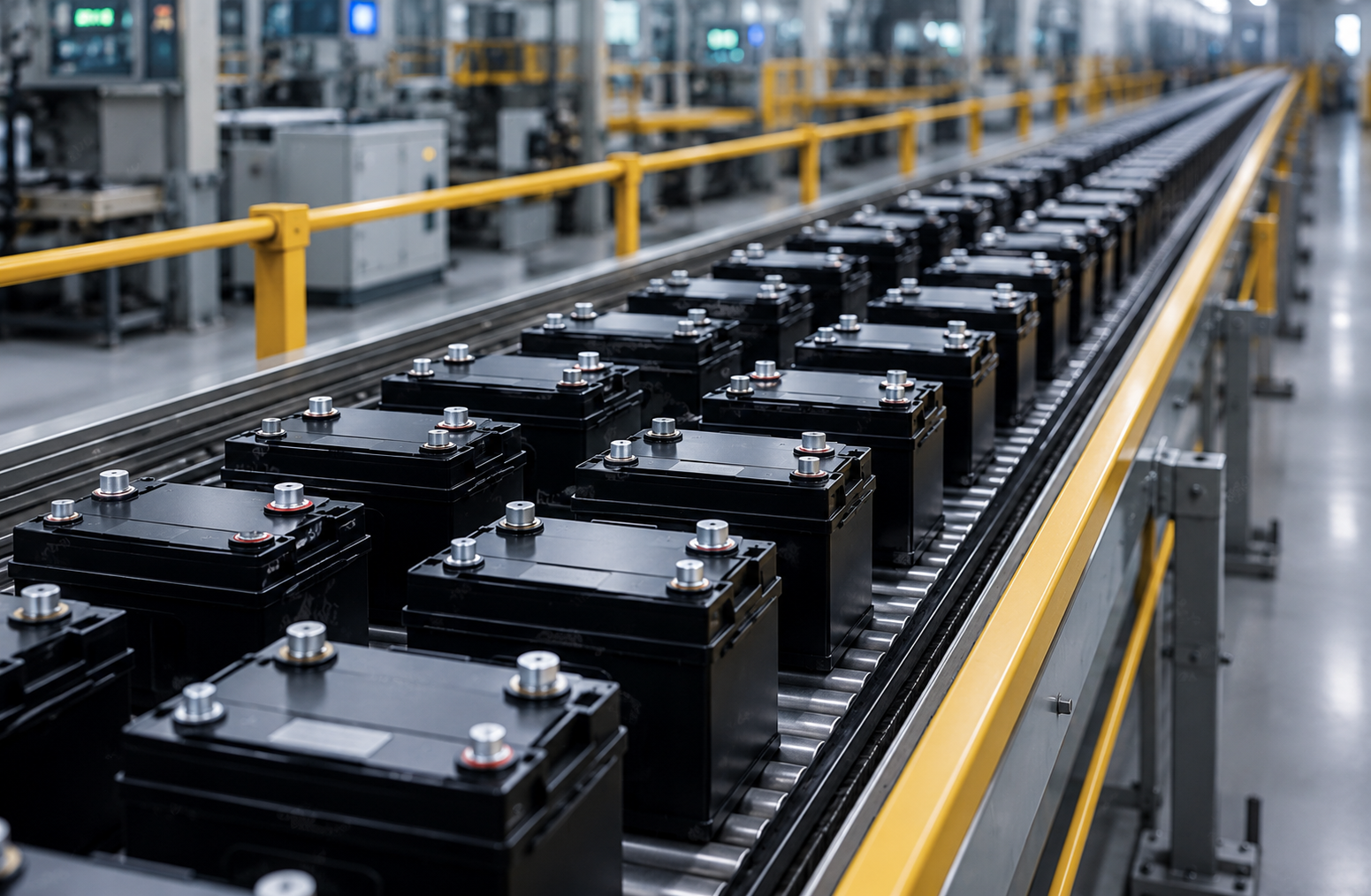
Local component manufacturing can support India in five important ways.
What the Proposed ₹12,000 Crore Scheme Could Change
The reported incentive scheme, if implemented, may change the investment logic for battery component manufacturing in India.
At present, investors evaluating battery materials and component manufacturing face several concerns. These include technology access, raw material sourcing, global competition, uncertain offtake, qualification timelines with cell manufacturers, high capital intensity, environmental compliance requirements and dependence on imported know-how.
An incentive scheme can improve project economics, but it cannot independently solve all commercial and execution risks. For investors, the key question will not only be whether incentives are available, but whether the project can be commercially viable after considering technology, scale, customers, raw materials, margins, quality systems and regulatory obligations.
The scheme may also encourage joint ventures, technology partnerships and supplier arrangements between Indian companies and global battery material players. However, such partnerships will need careful structuring. Battery component manufacturing is not a generic industrial activity. It requires technical validation, customer approval, sustained quality control and long-term alignment with cell chemistry roadmaps.
Opportunity Areas in the Battery Component Value Chain
The proposed policy support may create opportunities across multiple parts of the battery value chain.
- Cathode active materials are one of the most important cost and performance drivers in lithium-ion batteries. Different battery chemistries require different cathode materials. For example, LFP, NMC and other chemistries have distinct supply chains, processing methods and performance characteristics. Investment decisions in cathode materials must therefore be aligned with expected demand from cell manufacturers and end-use markets.
- Anode active materials are also critical to battery performance. Graphite-based anodes currently dominate many lithium-ion battery applications. Local manufacturing of anode materials may require access to suitable raw materials, processing technology, purification systems and customer qualification processes.
- Copper foil and aluminium foil are essential current collector materials used in battery cells. Manufacturing these products requires precision, consistency, surface quality and thickness control. These are not commodity products when supplied for battery applications.
- Electrolytes and separators are directly linked to safety and performance. They require high-purity inputs, specialised manufacturing environments, quality testing and strict process control. Any compromise can affect cell performance, cycle life and safety.
Recycling and material recovery may also become increasingly relevant. As battery manufacturing and deployment rise, end-of-life batteries, manufacturing scrap and recovered materials can become part of a circular battery ecosystem. However, recycling investments need to be evaluated separately based on feedstock availability, recovery technology, regulatory permissions and customer offtake.
Key Challenges for Investors
The business opportunity is attractive, but it is not straightforward. Several challenges need to be assessed before capital is committed.
- Technology Selection: Battery materials and components must align with future cell chemistry demand. A plant designed around the wrong chemistry or specification may face limited customer acceptance.
- Customer Qualification: Battery cell manufacturers generally do not procure critical inputs only on price. Suppliers must pass technical validation, performance testing, consistency checks and long-term reliability requirements. This can extend the commercialization timeline.
- Raw Material Availability: Many battery materials depend on minerals and processed intermediates that are concentrated in a limited number of global supply chains. Domestic manufacturing may still require imported raw materials unless backward integration or reliable sourcing arrangements are established.
- Scale: Battery component manufacturing often requires scale to achieve competitive costs. Small or underutilized plants may struggle against established global suppliers.
- Environmental and Regulatory Compliance: Chemical processing, solvent handling, waste treatment, emissions control and occupational safety requirements must be addressed at the planning stage. These issues can materially affect capex, opex, site selection and approval timelines.
- Financing: Banks and investors may require strong offtake visibility, technology validation, promoter capability, regulatory clarity and a credible financial model before funding such projects.
Strategic Implications for Business Planning
The proposed incentive scheme should not be viewed only as a subsidy opportunity. It should be viewed as a possible industrial opportunity that requires disciplined evaluation.
Any investor considering battery component manufacturing should assess the following questions:
- What specific component or material should be manufactured?
- Which battery chemistry and end-use segment will the project serve?
- Who are the likely customers?
- What is the expected domestic and export demand?
- Is technology available through in-house development, licensing, collaboration or joint venture?
- What is the minimum viable scale?
- What raw materials will be required and where will they be sourced from?
- What are the environmental, safety and compliance requirements?
- What will be the project cost, operating cost and margin structure?
- How sensitive is the project to incentive availability, capacity utilisation and price movements?
These questions are essential because policy incentives can support investment, but they cannot replace commercial viability, technical preparedness or execution discipline.
| Planning to evaluate battery component manufacturing, EV battery materials, BESS supply chain participation or an incentive-linked battery project in India? Before committing capital, it is important to assess demand visibility, technology options, raw material sourcing, customer qualification requirements, policy eligibility, project cost, financial viability and execution risks. Hmsa Consultancy Services supports clients in evaluating such opportunities through feasibility studies, detailed project reports, market assessment, financial modelling, business planning, project structuring and investment decision support. Share your requirements with us here. |
How Hmsa Consultancy Services Can Support
Hmsa Consultancy Services can support businesses evaluating entry into battery component manufacturing or related battery value chain opportunities through structured management consulting support.
Our role may include opportunity assessment, market and demand evaluation, policy and incentive review, preliminary business model assessment, project configuration support, financial feasibility, DPR preparation, risk mapping and investment decision support.
For battery component projects, Hmsa can also assist in evaluating key commercial and strategic questions such as product selection, target customer segments, capacity planning, project cost estimation, revenue assumptions, profitability assessment, funding readiness and implementation roadmap preparation.
Where specialized technical design, engineering, laboratory validation or process technology inputs are required, Hmsa can help the client identify the nature of such requirements and coordinate the overall business planning framework. Detailed engineering, process design and technology supply would need to be handled by qualified technical specialists or technology partners.
Conclusion
The proposed ₹12,000 crore support for battery component manufacturing could become an important step in India’s battery localisation journey. It may help move the country from cell and pack manufacturing towards a deeper supply chain covering critical battery materials and components.
However, the opportunity must be assessed carefully. Battery component manufacturing is capital-intensive, technology-sensitive and quality-driven. The success of such projects will depend not only on policy support, but also on technology access, customer qualification, raw material strategy, manufacturing discipline, environmental compliance and commercial viability.
For businesses evaluating this space, the right starting point is not merely incentive eligibility. It is a structured feasibility assessment that determines whether the proposed project can become technically credible, commercially viable and operationally executable.
Reference: Economic Times