Executive Summary
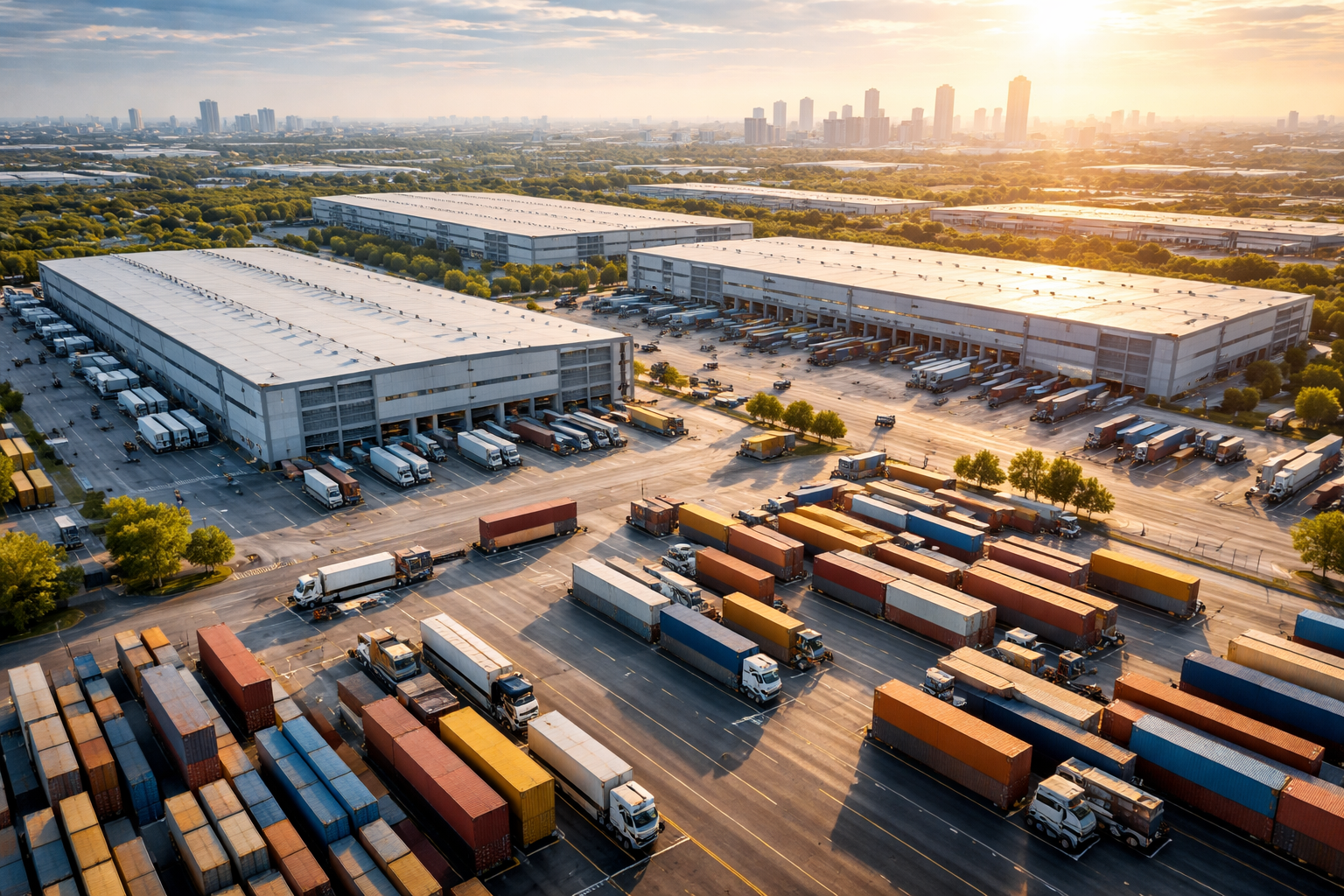
India’s warehousing sector is witnessing a strong surge in demand as supply chains undergo structural transformation and manufacturing activity accelerates across the country. Government initiatives supporting domestic manufacturing, combined with the rapid expansion of e-commerce and logistics outsourcing, are significantly increasing the need for modern storage and distribution infrastructure.
Key takeaways from the evolving warehouse landscape include:
- Manufacturing companies have emerged as the largest occupiers of warehouse space as production capacity expands across sectors.
- Third-party logistics providers and e-commerce companies continue to expand their distribution networks to meet rising consumer demand.
- Demand is shifting toward Grade A warehousing facilities designed to support automation and efficient inventory management.
- Institutional investors are increasingly allocating capital to logistics parks and large-scale warehouse platforms.
- Warehousing infrastructure is becoming a strategic component of supply chain planning rather than merely a support function.
These trends indicate that the warehousing sector is transitioning into a critical component of India’s logistics and industrial infrastructure.
Global Supply Chain Realignment Driving Demand
Global supply chains have undergone a significant recalibration over the past several years. Trade disruptions, geopolitical tensions, and the lessons learned during the pandemic have compelled companies to rethink how goods are manufactured, stored, and distributed across markets.
As multinational corporations diversify manufacturing locations and reduce overdependence on single geographies, India is increasingly emerging as a preferred manufacturing and distribution hub. Government initiatives aimed at strengthening domestic manufacturing have further accelerated this transition by encouraging investment across sectors such as electronics, automotive components, pharmaceuticals, and consumer goods.
As manufacturing activity expands, the demand for modern logistics and storage infrastructure naturally follows. Industrial warehousing absorption in India has grown significantly in recent years, reflecting the rapid expansion of supply chain infrastructure required to support production and distribution activities.
Industry leaders widely believe that this demand surge reflects a deeper structural shift rather than a temporary spike. Companies are increasingly seeking larger, more efficient warehousing facilities that can support integrated logistics networks and enable faster movement of goods across regions.
The combination of manufacturing expansion, supply chain redesign, and logistics modernization is creating sustained demand for high-quality warehousing infrastructure across the country.
Manufacturing Emerges as the Largest Demand Driver of Warehouse Sector
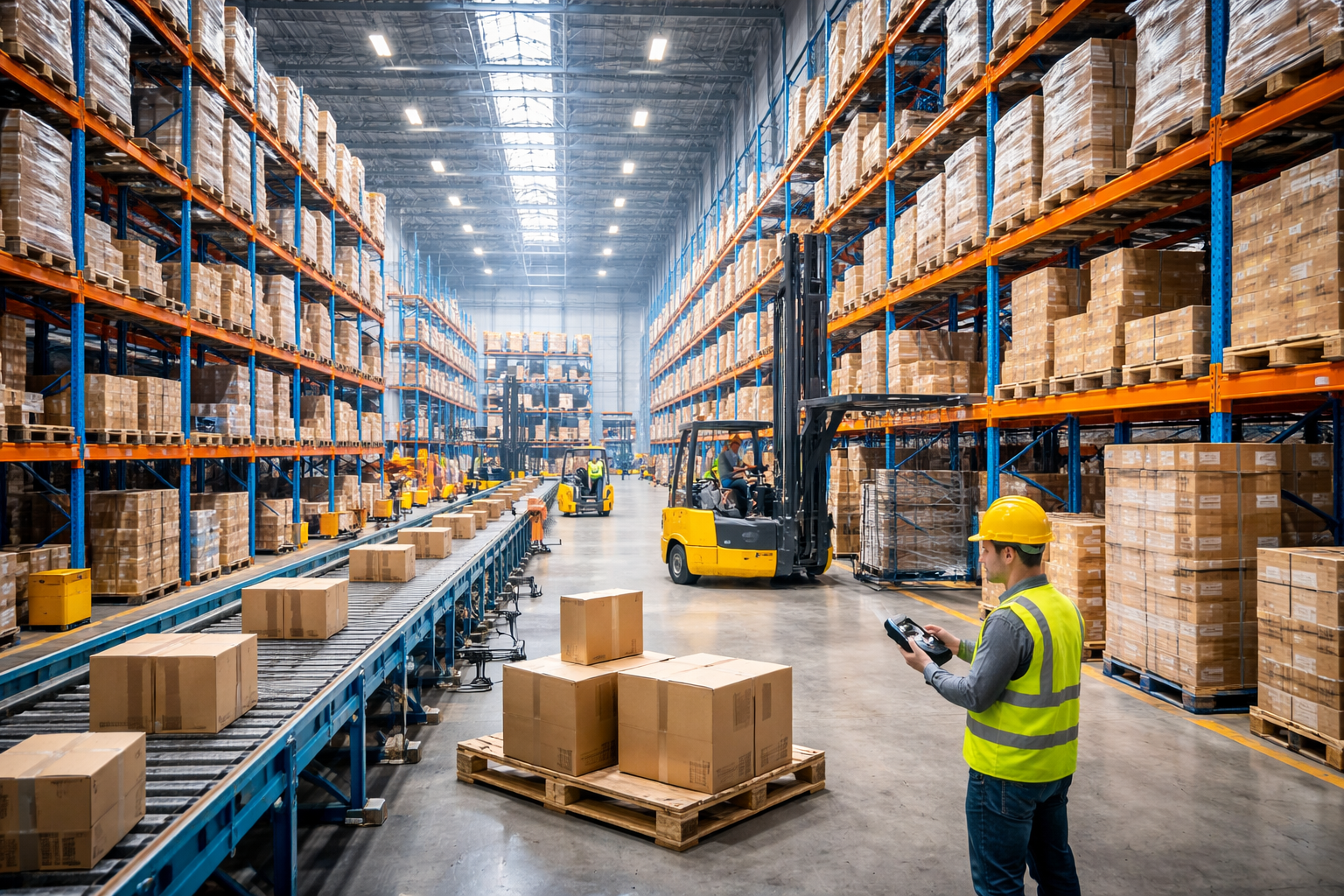
Manufacturing companies have become one of the most significant drivers of warehousing demand in India. As domestic production expands and global supply chains increasingly incorporate Indian manufacturing capacity, the need for storage and distribution infrastructure has grown substantially.
Industrial manufacturers require warehousing facilities for a wide range of operational purposes. These include storage of raw materials, intermediate goods, finished products, and export consignments. In addition, modern production systems often rely on just-in-time manufacturing processes, which require well-located distribution hubs capable of supporting rapid inventory movement.
As a result, manufacturing companies are increasingly investing in modern warehousing infrastructure located near industrial clusters, logistics corridors, and transportation networks. These facilities support more efficient inventory management while reducing supply chain disruptions and transportation delays.
Industry participants also point to the fact that manufacturing-driven warehousing demand reflects a fundamental shift in supply chain design. Companies are prioritizing resilience, operational efficiency, and supply chain visibility as critical factors in logistics planning. These priorities are driving demand for larger, technologically advanced warehouse facilities capable of supporting complex supply chain operations.
Role of E-Commerce and Third-Party Logistics Providers
In addition to manufacturing growth, the continued expansion of e-commerce and logistics outsourcing has played a significant role in increasing warehousing demand.
E-commerce companies require extensive warehousing infrastructure to support order fulfilment, inventory management, and rapid delivery commitments. The growth of online retail and omnichannel distribution models has led companies to establish regional fulfilment centres and last-mile delivery hubs across multiple cities.
These fulfilment centres serve as critical nodes within the e-commerce supply chain, enabling companies to store inventory closer to consumer markets and reduce delivery timelines. As online retail penetration continues to increase, demand for such warehousing facilities is expected to remain strong.
Third-party logistics providers have also emerged as major occupiers of warehouse space. Many businesses now prefer outsourcing logistics operations to specialized service providers capable of managing transportation, storage, and distribution functions more efficiently.
Logistics service providers operate multi-client warehouses that cater to several companies simultaneously, allowing businesses to scale their supply chain operations without investing in their own warehousing infrastructure. This growing trend toward logistics outsourcing has further strengthened demand for professionally managed warehouse facilities.
| Evaluating a warehouse, logistics park, or distribution infrastructure opportunity in India? Before committing to site finalisation, facility configuration, technology integration, or major capital expenditure, it is important to assess commercial viability, regional demand, operational requirements, and implementation readiness. Hmsa Consultancy supports clients through structured feasibility studies, detailed project reports, business model evaluation, and strategic advisory aligned to practical investment decisions. Share your requirements with us here. |
Shift Toward Grade ‘A’ Warehousing Infrastructure
Another defining trend in the sector is the increasing preference for Grade ‘A’ warehousing facilities. Traditionally, warehousing in India consisted largely of fragmented storage spaces and small facilities that lacked modern infrastructure and technology.
However, the evolving needs of manufacturers, retailers, and logistics providers are driving a shift toward higher quality warehousing assets.
Grade ‘A’ warehouses typically offer larger floor plates, higher floor load capacities, advanced fire safety systems, wide column spans, and integrated warehouse management systems. These facilities are also designed to accommodate automation technologies such as conveyor systems, robotic picking systems, and automated storage solutions.
The growing demand for such infrastructure reflects the increasing importance of operational efficiency and supply chain visibility in modern logistics networks. Companies are prioritizing facilities that enable faster movement of goods, improved inventory tracking, and reduced operational costs.
The increasing share of Grade ‘A’ warehousing in total market absorption indicates that occupiers are moving away from basic storage facilities toward modern logistics infrastructure capable of supporting complex distribution operations.
Strategic Warehousing Corridors and Emerging Logistics Hubs
The expansion of warehousing infrastructure is not uniform across the country. Demand tends to be concentrated in regions with strong connectivity to industrial clusters, ports, and major consumption centres.
Several metropolitan regions have emerged as major warehousing hubs due to their strategic location and infrastructure connectivity. These include the Mumbai Metropolitan Region, Delhi NCR, Bengaluru, Chennai, Pune, and Hyderabad.

These markets benefit from strong highway connectivity, access to large consumer markets, and proximity to major industrial corridors. As a result, they continue to attract significant investment in logistics parks and warehouse developments.
At the same time, a number of emerging logistics hubs are gaining prominence as companies seek cost advantages and improved access to regional markets. Cities such as Nagpur, Indore, and Coimbatore are increasingly being considered attractive locations for warehousing development due to lower land costs and improved connectivity.

Government initiatives aimed at strengthening logistics infrastructure are expected to further accelerate the development of these corridors.
Investment Momentum in the Warehousing Sector
The sustained growth in warehousing demand has attracted considerable interest from institutional investors and logistics infrastructure developers.
Over the past several years, global investment firms, sovereign wealth funds, and logistics developers have increasingly allocated capital toward logistics assets in India. Warehousing infrastructure is now widely viewed as an attractive asset class due to its stable demand outlook and long-term growth potential.
Institutional developers have established large logistics park platforms designed to support the needs of multinational companies, logistics operators, and industrial manufacturers. These platforms provide professionally managed warehousing infrastructure with standardized design, operational efficiency, and integrated logistics services.
Institutional participation has also contributed to improvements in infrastructure quality, operational standards, and access to long-term development capital. As supply chain networks continue to evolve, investment activity in the warehousing sector is expected to remain strong.
Challenges and Constraints
Despite the strong growth outlook, the warehousing sector continues to face several structural challenges.
One of the most significant constraints is the availability of large contiguous land parcels suitable for logistics development. Many potential warehouse locations face zoning restrictions, regulatory approvals, and infrastructure limitations that can delay project development.
In addition, logistics infrastructure in certain regions still requires improvement in terms of road connectivity, multimodal integration, and transportation efficiency. High logistics costs continue to remain a challenge for businesses operating in India.
Addressing these constraints will be important to ensure that warehousing infrastructure development keeps pace with the rapidly growing demand from manufacturing, retail, and logistics sectors.
Strategic Implications for Businesses and Investors
The transformation of the warehousing sector has important implications for businesses across multiple industries.
Companies must increasingly evaluate their logistics strategies in order to remain competitive. This includes decisions regarding warehouse network design, optimal locations for distribution centres, adoption of automation technologies, and partnerships with logistics service providers.
For infrastructure developers and investors, the sector presents opportunities to build scalable logistics platforms aligned with the growth of manufacturing and domestic consumption.
Businesses that proactively invest in modern warehousing infrastructure and efficient supply chain networks are likely to achieve significant operational advantages in the years ahead.
How Hmsa Can Help
Hmsa can support stakeholders in the warehousing and logistics sector by providing strategic advisory and project development services. This includes conducting market assessments to evaluate regional warehousing demand, identifying suitable locations near industrial corridors and logistics hubs, and preparing feasibility studies or detailed project reports to assess technical and financial viability. Hmsa also assists businesses in designing efficient warehouse networks, evaluating distribution strategies, and developing business models for logistics parks, distribution centres, and modern warehousing infrastructure.
Hmsa can support investors, developers, and logistics operators through transaction and operational advisory services. This includes commercial due diligence of warehousing projects, preparation of investment memorandums, financial evaluation of logistics infrastructure projects, and advisory on regulatory approvals and development planning. Hmsa also works with operating businesses to improve warehouse operations, optimize logistics costs, and develop scalable expansion strategies aligned with evolving supply chain requirements.
Reference: Economic Times