
India’s ethanol industry is entering a more uncertain phase. The achievement of 20% ethanol blending has been a major policy milestone, but it has also created a practical question for ethanol manufacturers: what is the next demand driver after E20?
Over the last few years, ethanol manufacturers have expanded capacities on the back of government policy support, OMC procurement demand, interest subvention schemes and the objective of reducing crude oil imports. However, the current procurement environment suggests that supply capacity may be running ahead of immediately available demand. For Ethanol Supply Year 2025-26, OMCs reportedly invited bids for around 1,050 crore litres, while manufacturers offered around 1,776 crore litres, indicating significant oversubscription in the procurement cycle.
This is where the discussion around E85, E100 and flex-fuel vehicles becomes relevant. For ethanol manufacturers, the main issue is whether higher ethanol fuels can create an additional demand pool, and whether that demand can develop quickly enough to improve plant utilization.
What are E85, E100 and Flex-Fuel Vehicles?
E20 means petrol blended with 20% ethanol. E85 refers to a high-ethanol fuel blend generally used in flex-fuel vehicles, where ethanol content is substantially higher than ordinary blended petrol. E100 broadly refers to ethanol fuel used without petrol blending, subject to applicable technical and quality specifications.
Flex-fuel vehicles are internal combustion engine vehicles designed to operate on more than one petrol-ethanol blend. They require ethanol-compatible fuel systems, sensors, engine calibration, seals, hoses, tanks and emission-control systems. This is different from simply increasing the ethanol content in petrol for the existing vehicle fleet
India is now exploring fuels beyond E20. Recent reports indicate that the Government is working on a roadmap for E100 availability through around 5,000 dispensing stations over the next two years. Standards for higher ethanol-blended petrol variants such as E22, E25, E27 and E30 have also been notified under IS 19850:2026.
This indicates that India may see both higher intermediate blends and separate flex-fuel use cases. However, E85 and E100 will require a different level of vehicle readiness, dispensing infrastructure and consumer acceptance.
| Market Update: June 2026 The Government has provided greater clarity on the rollout of dedicated high-ethanol fuel infrastructure. On 5 June 2026, coinciding with World Environment Day, E85 fuel was formally launched and the first outlet dispensing the higher ethanol blend was inaugurated in New Delhi. Union Minister for Petroleum and Natural Gas Hardeep Singh Puri stated that an initial network of approximately 50–100 ethanol dispensing stations would be established across Delhi-NCR, Pune, Mumbai and Nagpur. The network is expected to expand to around 500 stations by the end of 2026 and 5,000 stations by the end of 2027. The development coincided with the introduction of Maruti Suzuki’s flex-fuel WagonR, indicating that the rollout is seeking to align fuel availability with the introduction of compatible vehicles. Other support measures under consideration reportedly include road-tax concessions, availability of testing fuel, identification of dedicated retail outlets, and development of appropriate storage and dispensing infrastructure. Indian Oil also reportedly has around 400 outlets capable of dispensing E100 across selected states. To support commercial adoption, public-sector oil marketing companies are expected to offer E85 at approximately ₹20 per litre below the prevailing E20 price. The differential is intended to partly compensate consumers for ethanol’s lower energy content and the resulting reduction in fuel efficiency. However, the commercial attractiveness of E85 will ultimately depend on whether the lower pump price offsets the higher fuel consumption per kilometre, alongside the availability of compatible vehicles and dispensing infrastructure. The Government has also extended fiscal support to intermediate ethanol blends by exempting petrol blended at E22, E25, E27 and E30 levels from excise duty. The measure complements the standards already notified for these blends and could facilitate their phased commercial introduction as India moves beyond E20, subject to vehicle compatibility, fuel availability and implementation by oil marketing companies. Together, these developments provide a more defined implementation pathway for the adoption of intermediate blends, E85 and E100 than was available when this article was originally published. |
Why this matters for Ethanol Manufacturers
The ethanol industry’s immediate concern is demand visibility. E20 has created a large absorption base, but it may not be sufficient to fully utilise all installed and planned capacity if production capacity continues to expand faster than OMC procurement.
The current position has several commercial implications. OMC allocation remains the primary demand channel for fuel ethanol. Producers continue to face feedstock volatility across maize, damaged grains, rice, sugarcane juice and molasses. Sugar-based and grain-based ethanol producers also remain exposed to policy intervention because these feedstocks have competing uses in food, sugar, animal feed and industrial markets.
For plants that have invested aggressively, lower allocation can affect capacity utilisation, cash flows, debt servicing and working capital. This is especially relevant for standalone grain-based plants that do not have strong backward integration or alternate offtake channels.
In this context, E85 and E100 may create additional demand, but only if the supporting ecosystem develops. The benefit will depend on the availability of flex-fuel vehicles, consumer economics, retail infrastructure and long-term procurement visibility.
What E85 and E100 could Change
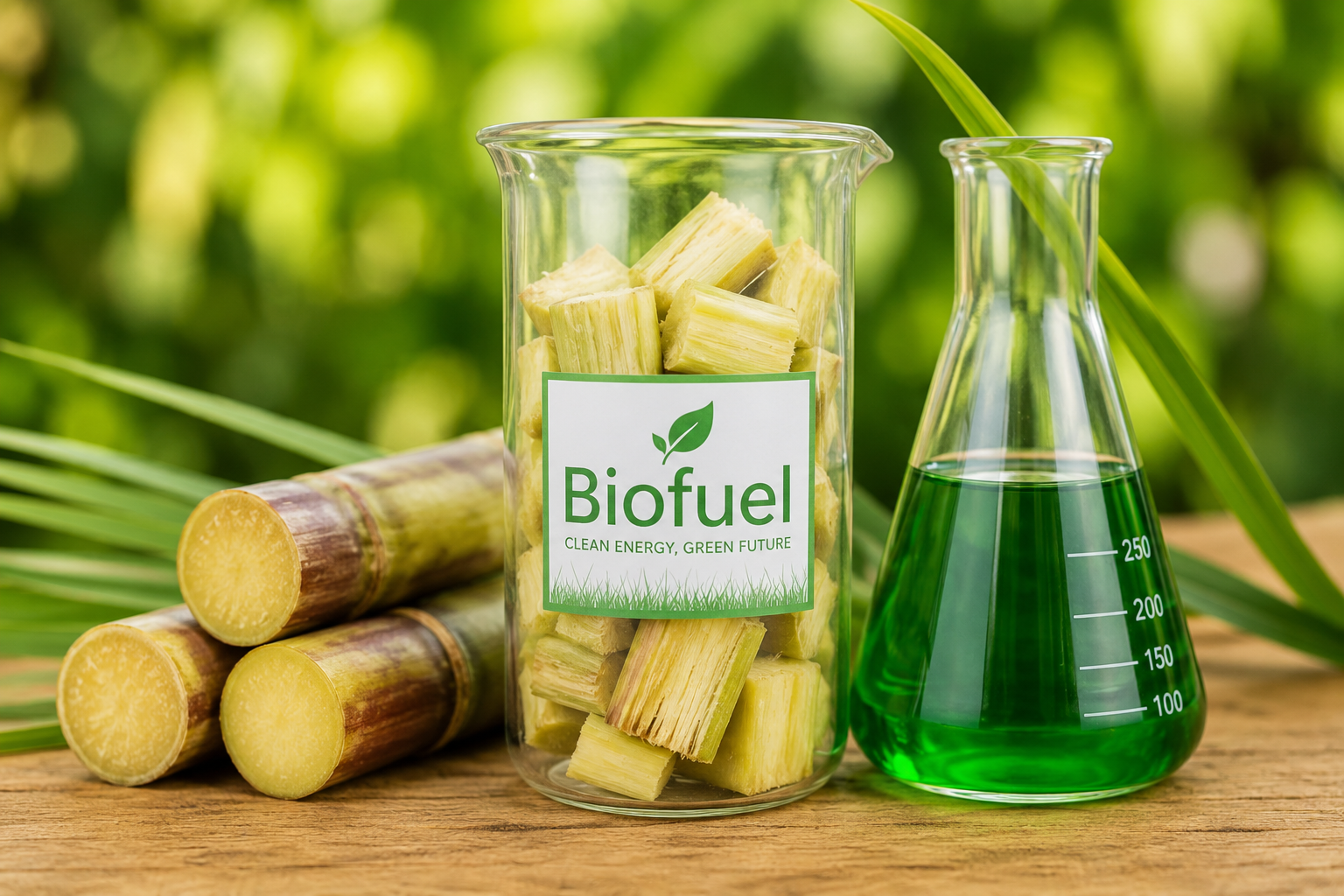
If E85 and E100 develop commercially, ethanol demand would not remain limited only to the blending percentage in normal petrol. A separate high-ethanol fuel category could emerge for certified flex-fuel vehicles.
This could help ethanol manufacturers in several ways. It could provide additional offtake beyond the E20 pool. It could improve utilisation of existing capacity. It could support better planning for grain-based and sugar-based plants. It could also improve the commercial position of producers located near OMC depots, fuel terminals, urban clusters or future E100 corridors.
The benefit, however, will not be uniform across the industry. Plants with efficient operations, reliable feedstock linkages, competitive conversion costs, strong quality systems and better logistics access are likely to be better placed. Smaller, highly leveraged or feedstock-vulnerable producers may continue to face pressure if higher-blend adoption remains slow.
Therefore, E85 and E100 should be treated as a potential medium-term demand opportunity, not as an immediate solution to the current oversupply situation.
When can this Opportunity Realistically Materialize?
The transition is likely to take time. The proposed creation of E100 dispensing stations is an important signal, but pumps alone will not create demand unless compatible vehicles are available and consumers are willing to use the fuel.
In the near term, E20 is likely to remain the main demand base. E22 to E30 standards may support a gradual movement towards higher intermediate blends. E85 and E100 are more likely to begin with selected markets, pilot corridors, large cities, ethanol-surplus regions and fleet-linked use cases.
For meaningful demand impact, three things must happen together. OEMs must launch flex-fuel vehicles at scale. OMCs must create reliable dispensing infrastructure. Consumers must see a clear cost-per-kilometre benefit despite lower fuel efficiency per litre.
Until this happens, ethanol manufacturers will continue to depend mainly on E20 procurement, industrial ethanol demand, potable or ENA markets where applicable, and other alternative channels. The interim period may therefore remain difficult for producers whose installed capacity is higher than their assured offtake.
What Challenges can Delay Success?
The first challenge is vehicle readiness. E85 and E100 cannot be used by the existing petrol vehicle fleet unless vehicles are technically compatible. Flex-fuel vehicles require compatible materials, fuel systems and engine calibration.
The second challenge is consumer economics. Ethanol has lower energy density than petrol. As a result, higher ethanol fuels generally need to be priced lower than petrol to make the running cost attractive. Without a clear cost advantage, consumers may not shift even if the fuel is available.
The third challenge is dispensing infrastructure. E85 and E100 require suitable storage, dispensing systems, seals, hoses, metering systems, labelling, safety protocols and quality checks. Co-location with existing fuel stations is the most practical option, but it still needs investment and operating discipline.
The fourth challenge is fuel quality. Ethanol absorbs water and needs careful storage and handling. Poor quality control can result in corrosion, phase separation, performance issues and consumer dissatisfaction. This is particularly important because vehicle compatibility concerns have already been discussed in relation to E20.
The fifth challenge is feedstock availability. Ethanol production depends on agricultural commodities. Any movement in maize, sugarcane, rice or molasses availability can affect plant economics. Feedstock policy will therefore remain an important variable for ethanol manufacturers.
The sixth challenge is policy predictability. Ethanol producers need visibility on procurement, pricing, feedstock eligibility and blending trajectory. Frequent changes can affect investment decisions, lender confidence and capacity planning.
| With capacity expanding faster than assured offtake, ethanol manufacturers need to plan carefully for utilisation, feedstock volatility, OMC allocation, diversification and future E85/E100 opportunities. Hmsa helps ethanol manufacturers and investors undertake feasibility studies, DPRs, market assessments, financial modelling oversight, diversification analysis and strategic business planning for ethanol and biofuel projects. Connect with Hmsa to assess the right growth strategy for your ethanol business. |
What should Ethanol Manufacturers do now?
In the short term, ethanol manufacturers should focus on protecting utilisation and cash flows. This may require better feedstock procurement, tighter operating cost control, stronger working capital management and more active pursuit of offtake opportunities.
They should also evaluate alternate revenue channels where technically and commercially feasible. These may include industrial ethanol, ENA, pharma-grade ethanol, chemical-grade ethanol, CO2 recovery, DDGS monetisation, bio-CNG, captive energy optimisation and other allied products. The relevance of each option will depend on plant configuration, licences, location, quality capability and market access.
In the long term, manufacturers should prepare for a market where fuel ethanol demand may become more segmented. E20, higher intermediate blends, E85, E100, industrial ethanol and downstream bio-based products may all require different commercial and operational capabilities.
This may involve investment in quality systems, multi-feedstock capability, logistics planning, OMC relationships, fleet-linked pilots and downstream product evaluation. Larger producers may also assess whether they should participate in adjacent opportunities such as maize processing, bio-based chemicals, carbon dioxide recovery, grain storage or other feedstock-linked businesses.
How Hmsa can Help
Hmsa can support ethanol manufacturers, investors and diversified industrial groups in assessing how the E85/E100 transition may affect their business strategy, capacity planning and financial viability.
For existing ethanol manufacturers, Hmsa can help evaluate plant competitiveness, feedstock flexibility, utilisation risk, cost structure, working capital stress and diversification options. This can support decisions on expansion, consolidation, diversification or restructuring.
For investors and new project promoters, Hmsa can prepare feasibility studies, project reports, DPRs, financial models and lender-facing assessments that test projects under realistic E20, E30, E85 and E100 scenarios.
For companies evaluating future growth, Hmsa can assist in assessing downstream opportunities, OMC linkage strategies, industrial ethanol markets, biofuel partnerships, maize or sugarcane value-chain integration, and long-term business planning.
Conclusion
E85, E100 and flex-fuel vehicles could create an important additional demand channel for ethanol in India. For ethanol manufacturers, this is relevant because the sector is already facing signs of allocation pressure and capacity utilisation risk.
However, the opportunity will depend on vehicle availability, fuel pricing, dispensing infrastructure, fuel quality, consumer confidence and policy predictability. Until these factors develop, E20 will remain the main demand base.
Ethanol manufacturers should therefore use the interim period to strengthen their cost position, improve feedstock flexibility, secure offtake, evaluate diversification and prepare for multiple demand scenarios. The companies that do this early will be better positioned if E85 and E100 become commercially meaningful fuel categories in India.