Industries
BESS i.e Battery Energy Storage System Consultants
Hmsa Consultancy Services supports businesses, developers, investors and industrial users in evaluating Battery Energy Storage System opportunities through feasibility studies, Detailed Project Reports, entry strategy, financial modelling, tender assessment and commercial due diligence.
Our focus is to help clients assess whether a proposed BESS opportunity is commercially viable, financially sustainable and practically implementable before capital is committed.
What is BESS?
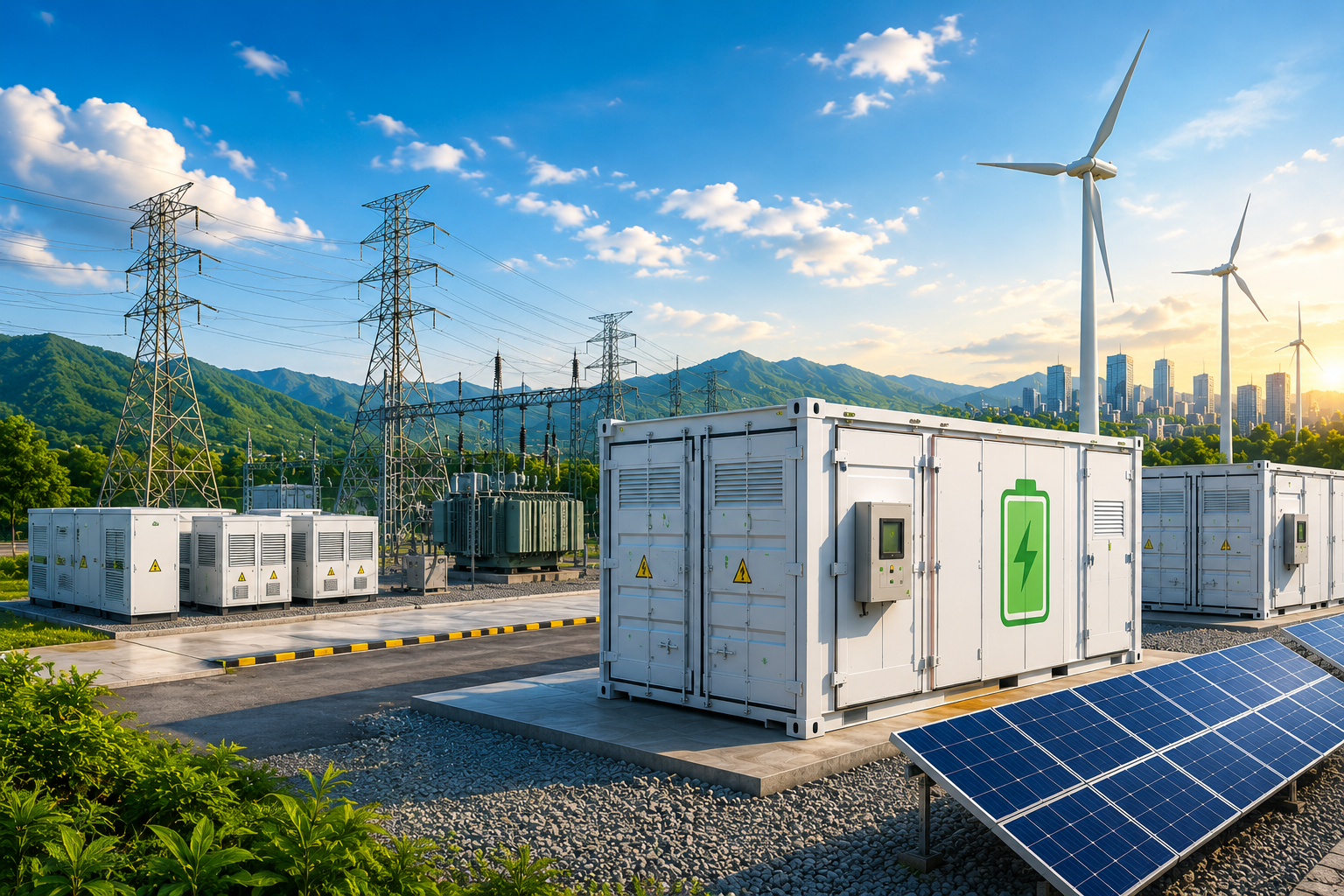
Battery Energy Storage System, commonly referred to as BESS, is a system that stores electricity in rechargeable batteries and supplies it back when required.
BESS helps manage the timing difference between electricity generation and electricity consumption. Power can be stored when generation is available, surplus or commercially favourable, and discharged when demand is higher, supply is constrained, or reliability support is required.
BESS is becoming increasingly relevant as India’s power system moves towards higher renewable energy penetration. Solar and wind power are variable by nature. Battery storage can support renewable energy integration by storing excess power and supplying it during low-generation or high-demand periods.
BESS Business Opportunities We Help Clients Evaluate
- BESS manufacturing
This involves the production of battery cells, modules, packs or related components used in energy storage systems. Businesses must evaluate technology choices, supply chain requirements, capital investment and market demand before entering this segment. - Battery pack and container assembly
Companies may focus on assembling battery packs, racks or containerised storage solutions using sourced components. Success in this area depends on quality control, system integration capabilities and compliance with applicable safety standards.
• System integration
System integrators combine batteries, power conversion systems, energy management systems and other equipment into a complete operational solution. This opportunity requires strong technical expertise and the ability to deliver reliable, safe and efficient projects. - Utility-scale BESS project development
Developers identify, plan and execute large-scale storage projects that support grid operations and renewable energy integration. Project viability depends on factors such as land availability, grid connectivity, regulatory approvals and long-term revenue models. - Captive and commercial energy storage deployment
Industrial and commercial users may deploy BESS to improve energy reliability, manage peak demand and optimise electricity costs. Evaluating load profiles, operational requirements and expected savings is essential before investment. - Equipment supply and distribution
Businesses may participate by supplying batteries, inverters, monitoring systems, thermal management equipment or other supporting infrastructure. Market access, supplier relationships and after-sales support capabilities are important considerations in this segment. - Software and energy management solutions
Software platforms help monitor, control and optimise the performance of battery energy storage systems. Opportunities exist in analytics, forecasting, remote monitoring and energy management applications that improve operational efficiency. - Safety systems and supporting technologies
BESS projects require specialised fire detection, fire suppression, thermal management and safety monitoring solutions. Companies offering these technologies can address critical operational and regulatory requirements within the sector. - Operations and maintenance services
Long-term performance of BESS assets depends on effective monitoring, maintenance and lifecycle management. Service providers can support asset owners through preventive maintenance, diagnostics, performance optimisation and system upgrades.
How Hmsa Can Support
A BESS feasibility study evaluates whether a proposed Battery Energy Storage System business or project is commercially, operationally and financially viable. It may cover market demand, target applications, project capacity, investment requirement, operating costs, revenue assumptions, risks and expected returns.
A feasibility study is generally used at an early stage to assess whether the opportunity should be pursued. A Detailed Project Report is more comprehensive and is usually prepared when the project concept, capacity, location and business model are reasonably defined. A DPR may support internal approval, lender discussions, investor evaluation or implementation planning.
Yes. Hmsa can assess different entry options across the BESS value chain, including battery pack assembly, containerised BESS assembly, system integration, utility-scale project development, captive storage, equipment supply, software, safety systems and operations and maintenance. The objective is to identify the opportunity best aligned with the client’s capabilities, investment appetite and commercial objectives.
Yes. Hmsa can prepare financial models for BESS businesses and projects covering capital cost, operating cost, revenue assumptions, financing structure, debt servicing, cash flows, project returns, equity returns, payback and sensitivity scenarios. The model can be customised based on the proposed application, capacity and business model.
Yes. Hmsa can review BESS or renewable-plus-storage tenders from a commercial and financial perspective. The assessment may cover eligibility conditions, bid obligations, project structure, investment requirement, revenue assumptions, risk allocation, financing implications and preliminary bid viability.
Yes. Industrial and commercial users may evaluate BESS for peak-load management, backup power, renewable-energy optimisation, power reliability and operating-cost improvement. Hmsa can assess load profile, use case, expected savings, capital cost, operating assumptions, payback and financial viability.
Yes. Hmsa can prepare a structured BESS Detailed Project Report for lender discussions, investor evaluation, internal approval or strategic partnership discussions. The DPR may include market assessment, business model, technical overview, project cost, means of finance, financial projections, sensitivity analysis, risks and implementation plan.
No. Hmsa is not an EPC contractor, battery cell manufacturer or detailed engineering design agency. Hmsa’s role is focused on business planning, feasibility assessment, project reports, market assessment, financial evaluation, commercial due diligence, bid assessment and implementation planning. Where detailed engineering, electrical design, safety certification or technology validation is required, specialised technical consultants or engineering partners may be required.
Yes. Hmsa can support identification and preliminary evaluation of technology providers, equipment suppliers, system integrators, EPC partners, financial partners or strategic collaborators. The focus is on commercial evaluation and partner shortlisting. Detailed technical validation may require specialist support.
Yes. Hmsa can assist in preparing project reports, financial projections, investment notes, lender discussion material, investor presentations and responses to commercial or financial queries. This support helps clients present the opportunity in a structured and decision-ready format.
Businesses evaluating BESS manufacturing, battery pack assembly, containerised storage, system integration, utility-scale projects, captive storage, equipment supply, software, safety systems, O&M services or investment opportunities may consider engaging Hmsa. The services are also relevant for investors, renewable-energy developers, EPC companies, industrial users and infrastructure developers assessing entry into the BESS sector.
Hmsa can be engaged at the early opportunity-assessment stage, feasibility stage, DPR stage, tender evaluation stage or investor-readiness stage. Early engagement is useful when the client is still deciding which part of the BESS value chain to enter or whether the proposed project is commercially viable.