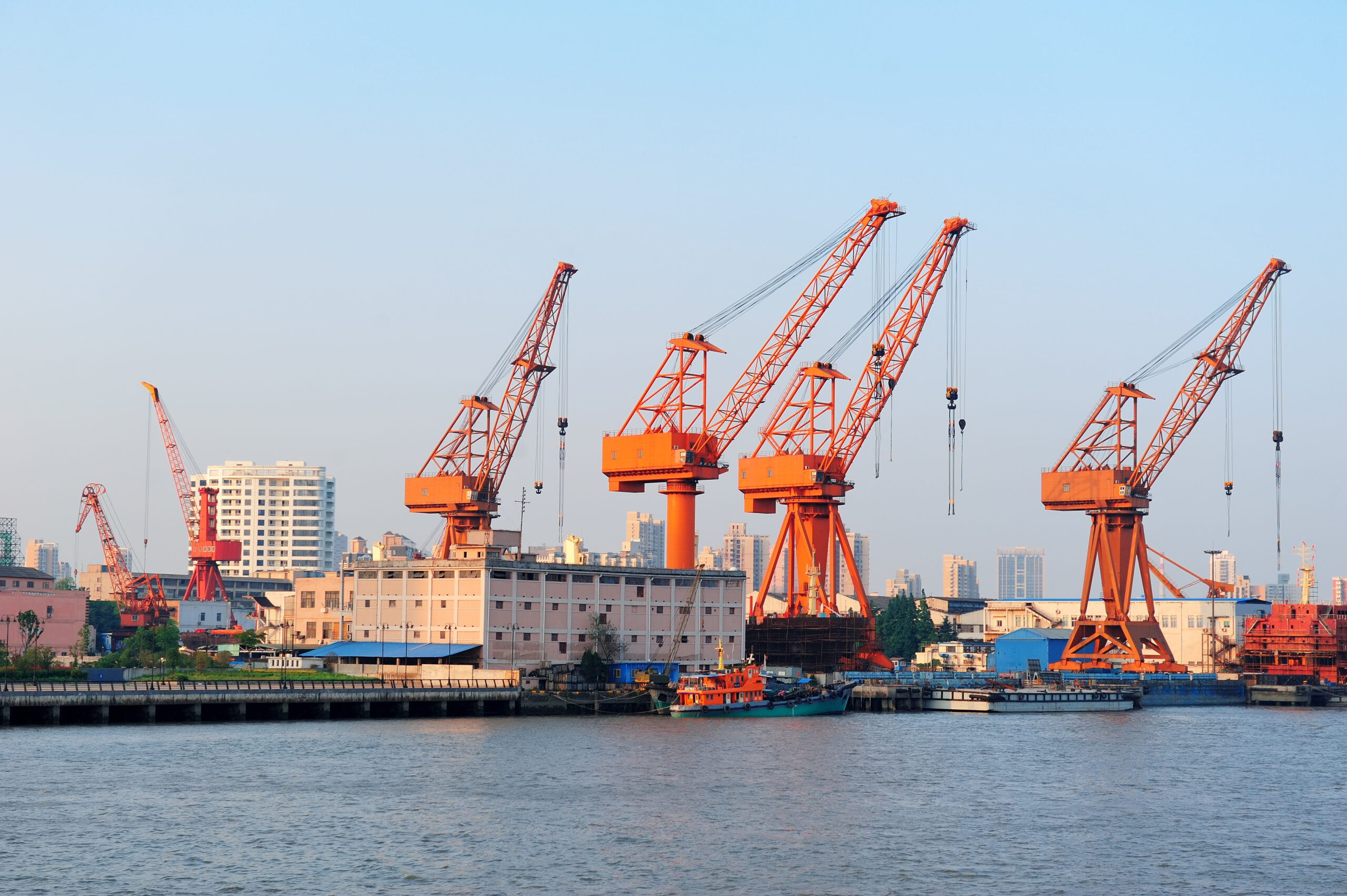
Gujarat Maritime Board has initiated a significant market consultation process for expanding Gujarat’s maritime infrastructure. Through two separate Global Expressions of Interest issued on 21 July 2026, Gujarat Maritime Board has invited participation for the development of six greenfield ports, three greenfield shipbuilding and ship-repair yards, and one integrated shipbuilding cluster.
The greenfield ports are proposed to be developed exclusively under the Build, Own, Operate and Transfer model. The shipyard EOI, meanwhile, seeks project concepts and investor inputs for shipbuilding yards, repair facilities, maritime equipment manufacturing units and related ancillary infrastructure.
While these opportunities are commonly described as being at the “pre-bid” stage, the current process is technically a market-sounding and investor-consultation exercise rather than a tender or competitive bid. Participation does not confer any right, preference or entitlement in a subsequent RFQ or RFP. However, the responses received may influence how Gujarat Maritime Board structures future procurement, concession, allotment and investor-support arrangements.
For organisations considering participation, the immediate task is therefore not merely to complete the prescribed annexures. It is to develop a commercially grounded project concept that demonstrates strategic fit, market relevance, implementation capability and a realistic understanding of the selected location.
Key Dates for the Gujarat Maritime Board EOI Process
The schedules for the port and shipyard EOIs currently provide for:
- Last date for submission of queries: 20 August 2026
- Tentative investor interaction meeting: 21 August 2026
- Last date for EOI submission: 21 September 2026 at 18:10 hours IST
- Submission mode: Hard copy submission
- Language: English
Participants should continue monitoring the Gujarat Maritime Board website for corrigenda, clarifications and any revision to the dates or venue of the investor interaction meeting.
Opportunities Covered Under the Gujarat Maritime Board EOIs

Six Indicative Greenfield Port Locations
Gujarat Maritime Board has identified the following coastal zones for preliminary market consultation:
- Nana Layja, Kachchh
- Vadhera, Amreli
- Vadodra Jhala, Gir Somnath
- Damka, Surat
- Lakhanka, Bhavnagar
- Bhogat, Devbhoomi Dwarka
The proposed ports are expected to be developed through private participation under the BOOT model. Gujarat Maritime Board has clarified that these are indicative development zones and are not final, reserved, committed, allotted or awarded locations. Applicants may also provide suggestions concerning alternative locations, supported by appropriate justification.
Three Greenfield Shipyard Locations
The shipbuilding and ship-repair EOI covers:
- Mithapur, Devbhoomi Dwarka
- Ghogha, Bhavnagar
- Vadhera, Amreli
These locations are being considered for facilities that may include shipbuilding berths, repair docks, dry docks, slipways, shiplifts, floating docks, fabrication shops, panel production facilities, surface-treatment areas, warehouses, testing laboratories and supporting utilities.
Integrated Shipbuilding Cluster at Kuchhadi
An integrated shipbuilding cluster has been proposed at Kuchhadi in Porbandar district. The indicative site profile covers approximately 823 hectares and 2.7 kilometres of waterfront, although Gujarat Maritime Board requires applicants to independently validate all technical, environmental and land-related information. The cluster is envisaged to accommodate shipyards, maritime equipment manufacturing, common infrastructure, skill development and ancillary industrial activities.
Why This Opportunity is Strategically Relevant
Gujarat has approximately 2,340 kilometres of coastline and has historically used private participation to develop its non-major port ecosystem. According to the greenfield port EOI, Gujarat Maritime Board -administered non-major ports had an aggregate capacity of approximately 608 MMTPA and handled around 484 MMTPA in FY 2025–26. The EOI also states that Gujarat Maritime Board ports accounted for approximately 64.3 percent of India’s non-major port traffic during the year. These figures are expressly described as indicative and should not be treated as evidence of demand for any specific proposed location.
The opportunity is therefore significant, but the broader strength of Gujarat’s maritime sector does not automatically establish the commercial viability of each proposed port or shipyard. Every location has a different hinterland, marine configuration, connectivity profile, environmental context, cargo opportunity and capital requirement.
A participant should consequently avoid beginning with a predetermined capacity or investment number. The project concept should emerge from a structured evaluation of market demand, marine conditions, land and waterfront requirements, cargo or vessel segments, connectivity, development phasing and financing capacity.
What Gujarat Maritime Board Expects from a Greenfield Port EOI
The port EOI requires a structured Project Concept Note. Among other matters, the response is expected to cover:
- Preferred development zone
- Proposed cargo profile and basis for cargo assumptions
- Indicative initial capacity and long-term expansion potential
- Phased development plan
- Preliminary marine and landside infrastructure concept
- Broad capital investment requirement
- Proposed financing and ownership approach
- Road, rail, pipeline and logistics connectivity
- Environmental, social and governance considerations
- Smart-port and digital infrastructure
- Key risks and proposed mitigation measures
- Support or facilitation expected from Gujarat Maritime Board and the Government of Gujarat
Applicants are also required to submit prescribed corporate, experience and financial documents, including evidence of relevant projects, audited financial information and the mandatory undertakings. Failure to include a required document may result in rejection of the submission.
The response must be internally consistent. For example, proposed cargo volumes should support the stated berth, storage and evacuation requirements. Capacity assumptions should correspond with the proposed development phasing. The financing approach should be proportionate to the expected capital expenditure and implementation period.
What Gujarat Maritime Board Expects from a Shipyard or Shipbuilding Cluster EOI
The shipyard Project Concept Note requires a different analytical framework. It asks participants to indicate:
- Vessel segments proposed to be built or repaired
- Maximum vessel dimensions and carrying capacity
- Indicative annual production or repair capacity
- Principal shipyard facilities
- Broad layout and development phases
- Land and waterfront requirement
- Navigational draft and marine-access requirement
- Road, rail, utility and logistics requirements
- Total investment and Phase I investment
- Indicative debt-equity structure and financing approach
- Green shipyard, water, energy and waste-management systems
- Automation, robotics, IoT, digital-twin and smart-yard systems
- Key risks and recommendations for the subsequent RFQ or RFP framework
The shipyard EOI does not prescribe pre-qualification thresholds at the present stage and is not being evaluated as a competitive shortlist. Nevertheless, applicants are expected to provide their maritime track record, average audited net worth, technology capabilities and relevant partnerships. Consortium or joint venture participants must also provide an agreement defining each member’s responsibilities and proposed interest in the project.
Seven Assessments to Complete Before Participating
1. Bid or No-Bid Assessment
The first decision is whether the opportunity is aligned with the organisation’s capabilities, capital availability and long-term strategic direction. Participation should not be based solely on the scale of the announcement.
A preliminary assessment should determine whether the organisation is positioned to act as a developer, operator, shipbuilder, repair-yard owner, technology provider, equipment manufacturer, financial partner or consortium member.
2. Comparative Location Assessment
Selecting a location requires more than reviewing the indicative profiles in the EOI. The assessment should consider:
- Proximity to cargo-generating industries or vessel markets
- Existing and competing maritime facilities
- Road, rail, pipeline and multimodal connectivity
- Land and waterfront availability
- Bathymetry, draft and potential dredging
- Environmental and CRZ considerations
- Utility availability
- Scope for phased expansion
The preferred location should be supported by a transparent decision framework rather than a general statement of interest.
3. Market and Demand Assessment
For a port project, the commercial assessment should identify realistic cargo segments, potential origin-destination flows, competing gateways and the basis for projected throughput.
For a shipyard, the analysis should examine vessel segments, domestic and export demand, construction and repair cycles, target customer groups, competing yards, equipment requirements and the proposed operating model.
At the EOI stage, this need not become a full-scale bankable feasibility study. It should, however, be sufficiently robust to prevent unsupported capacity, revenue or investment assumptions.
4. Project Concept and Capacity Sizing
The project concept should connect the market opportunity with the physical development plan.
For ports, this may cover berth configuration, cargo-handling systems, storage, evacuation infrastructure, utilities, digital systems and future expansion.
For shipyards, it may include dry docks or slipways, fabrication shops, panel lines, cranes, outfitting facilities, repair infrastructure, testing areas, utility systems and marine access.
Capacity should be sized using demand, operational configuration and development constraints, rather than being selected as an arbitrary headline number.
5. Preliminary Commercial and Financial Evaluation
Although the current EOI is non-binding and does not require a financial bid, applicants must still provide credible investment and financing inputs.
The assessment should examine:
- Indicative project cost
- Phase-wise capital expenditure
- Operating cost structure
- Revenue sources
- Capacity utilisation
- Debt-equity structure
- Funding strategy
- Implementation period
- Key financial sensitivities
- Conditions necessary for bankability
A preliminary financial model can help establish whether the project concept is directionally viable and whether the proposed scale is aligned with the participant’s financial capacity.
6. Consortium and Partner Strategy
Few large maritime infrastructure projects can be developed through financial strength alone. The proposed structure may require a combination of development, operational, technical, construction, equipment, technology and financing capabilities.
A consortium assessment should identify capability gaps, define the role of each member and ensure that the combined credentials support the project concept. The responsibilities stated in the consortium agreement should also align with the technical and commercial narrative presented in the EOI.
7. Clarification and Submission Planning
The query process should be used to clarify issues that materially affect the project concept or future participation. These may relate to land and waterfront allocation, concession structure, bid parameters, site investigations, common infrastructure, connectivity responsibilities, incentives, performance commitments and the expected subsequent procurement process.
Queries should be precise, clause-specific and commercially relevant. The final response should then be reviewed for factual consistency, documentary completeness, signing requirements and compliance with the prescribed annexures.
| Considering Participation in the Gujarat Maritime Board EOI? Before selecting a port or shipyard location, forming a consortium or preparing the Project Concept Note, it is important to assess strategic fit, market potential, proposed capacity, investment requirements, financing capability and implementation risks. Hmsa Consultancy Services supports organisations in evaluating greenfield port, shipyard and maritime infrastructure opportunities through structured pre-bid assessment, market analysis, project concept development, preliminary feasibility evaluation, financial modelling, consortium planning and EOI response preparation. Share your participation requirements with us here. |
Common Weaknesses that can Reduce the Value of an EOI Response
A response may technically comply with the submission format but still fail to present a useful investment proposition. Common weaknesses include:
- Selecting a location without comparative analysis
- Using generic market statements without location-specific demand assessment
- Proposing capacity without cargo or vessel-market justification
- Presenting capital estimates disconnected from the infrastructure concept
- Overstating demand, policy benefits or expected returns
- Failing to identify consortium capability gaps
- Providing inconsistent figures across the project concept, financing plan and annexures
- Treating indicative Gujarat Maritime Board site information as independently verified data
- Waiting until the final stage to compile supporting documents and approvals
- Submitting broad queries that do not address material commercial or technical uncertainties
The official documents specifically require applicants to independently undertake market, technical, financial, legal, environmental and regulatory assessments. Gujarat Maritime Board does not guarantee land availability, cargo potential, project cost, environmental suitability, financial returns or commercial viability.
How Hmsa Consultancy Services Can Support Gujarat Maritime Board EOI Participants
Hmsa can provide end-to-end commercial and strategic support for participation in the port, shipyard or shipbuilding-cluster EOI.
We can review the applicable EOI, policy framework, project profiles and annexures to identify the decisions, information and supporting documents required from the participant.
Hmsa can develop a structured framework for comparing the proposed locations based on market access, strategic fit, industrial hinterland, connectivity, development considerations and broad commercial potential.
Depending on the opportunity, the assessment can cover cargo segments, vessel markets, competitive infrastructure, customer requirements, demand drivers and development potential.
We can assist in defining the proposed capacity, cargo or vessel segments, business model, development phases, infrastructure configuration, operating approach and investment rationale.
Hmsa can develop indicative capital expenditure, operating assumptions, revenue projections, funding structure and financial sensitivities to support the project concept and financing narrative.
Where participation requires multiple capabilities, we can help identify consortium requirements, define partner roles, evaluate capability gaps and structure the responsibilities matrix for the proposed submission.
Hmsa can prepare clause-specific commercial, financial and project-structuring queries for submission to Gujarat Maritime Board and support preparation for the investor interaction process.
We can coordinate commercial, technical and financial inputs, prepare the structured Project Concept Note, compile supporting credentials and undertake a final consistency and compliance review before submission.
Specialist legal, marine engineering, environmental, bathymetric and statutory inputs may be obtained from appropriate domain professionals where required.
Conclusion
The Gujarat Maritime Board EOIs provide an early opportunity to participate in the development of Gujarat’s next phase of port, shipbuilding and ship-repair infrastructure. However, the present process should not be mistaken for an assured project allocation or a conventional tender.
The value of participation lies in presenting a credible and well-structured development concept while preparing the organization for a possible subsequent RFQ, RFP or competitive allotment process. A strong response should connect the selected location with a defensible market opportunity, realistic capacity, suitable infrastructure, credible financing approach and clearly defined implementation capability.