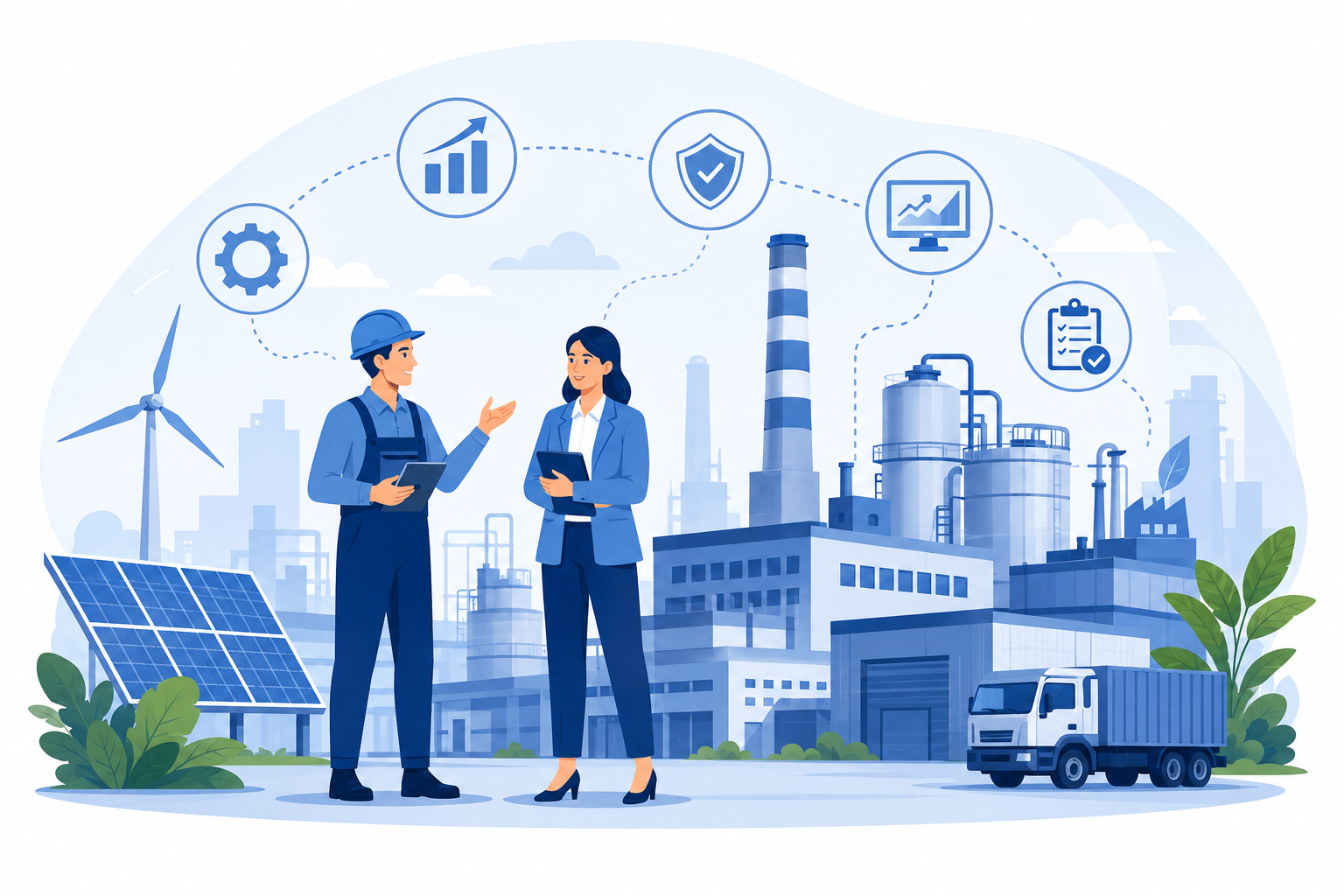
Gujarat has historically been one of India’s most industrially active states, with a strong base across chemicals, petrochemicals, pharmaceuticals, textiles, engineering, ports, logistics and manufacturing. The Viksit Gujarat Industrial Policy 2026 seeks to build on this base by pushing the state towards higher-value manufacturing, green industrialization, innovation-led growth, MSME scale-up, startup development, stronger industrial infrastructure and broader regional development.
For businesses evaluating new projects, the policy is important not merely because it provides incentives. Its larger significance lies in the direction it gives to future industrial activity in Gujarat. The policy indicates where the state wants investment to move, which sectors it wants to deepen, which infrastructure gaps it wants to address, and which kinds of enterprises it wants to support.
This creates a practical question for businesses, entrepreneurs, investors and project promoters:
What new business opportunities may emerge because of the Viksit Gujarat Industrial Policy 2026?
1. Green Energy, Battery Storage and Hydrogen-linked Opportunities
One of the most visible opportunity areas is the green energy transition. Gujarat already has a strong renewable energy base and the policy document places emphasis on reliable green power, renewable energy capacity, green hydrogen, green ammonia, fuel cells and industrial decarbonisation.
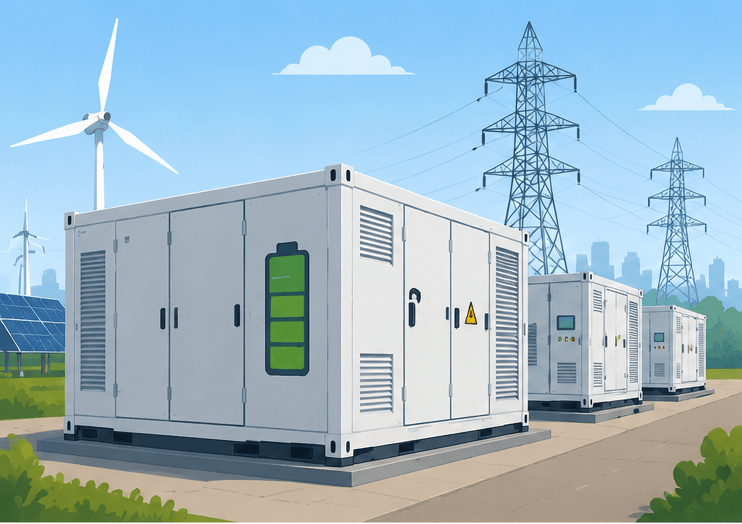
This can create opportunities across the clean energy value chain, including:
- Green hydrogen and green ammonia projects
- Electrolyzer manufacturing
- Battery energy storage systems
- Renewable energy equipment manufacturing
- Fuel cell ecosystem development
- Industrial decarbonisation advisory and implementation support
- Energy management and storage-linked services
The opportunity is not restricted to large-scale energy producers. Ancillary manufacturers, equipment suppliers, engineering service providers, technology integrators, logistics players and financial institutions may also find new project possibilities as Gujarat pushes for cleaner industrial growth.
For businesses, the key issue will be commercial viability. Green energy-linked projects often look attractive at the policy level, but the actual investment decision depends on power cost, offtake arrangements, technology selection, capex intensity, lifecycle costs, regulatory approvals and demand visibility.
2. Auto Components, Mobility, Drones and Advanced Manufacturing
The policy also points towards a broader advanced manufacturing direction. Gujarat’s existing base in automobiles, engineering and industrial manufacturing gives it a relevant foundation for new opportunities in mobility and high-value industrial equipment.
Potential opportunities may emerge in:

- Auto and auto component manufacturing
- Electric mobility components
- Aviation-linked manufacturing
- Space-related manufacturing
- Drones and unmanned systems
- Robots and automation equipment
- Heavy earth-moving equipment
- Advanced industrial machinery
These sectors are linked not only to domestic consumption but also to export competitiveness. Gujarat’s ports, industrial estates, logistics connectivity and established supplier ecosystem can be important advantages for companies evaluating manufacturing investments in these areas.
However, businesses entering these sectors will need to assess localisation depth, customer qualification requirements, vendor ecosystem maturity, testing and certification needs, and long-term demand from OEMs or institutional buyers.
3. Electronics, Semiconductor Ancillaries and High-Purity Materials
The policy direction also creates opportunities around electronics, semiconductors and specialised industrial inputs. Importantly, business opportunities may not be limited to large semiconductor fabrication projects. A wider ecosystem can emerge around the sector.
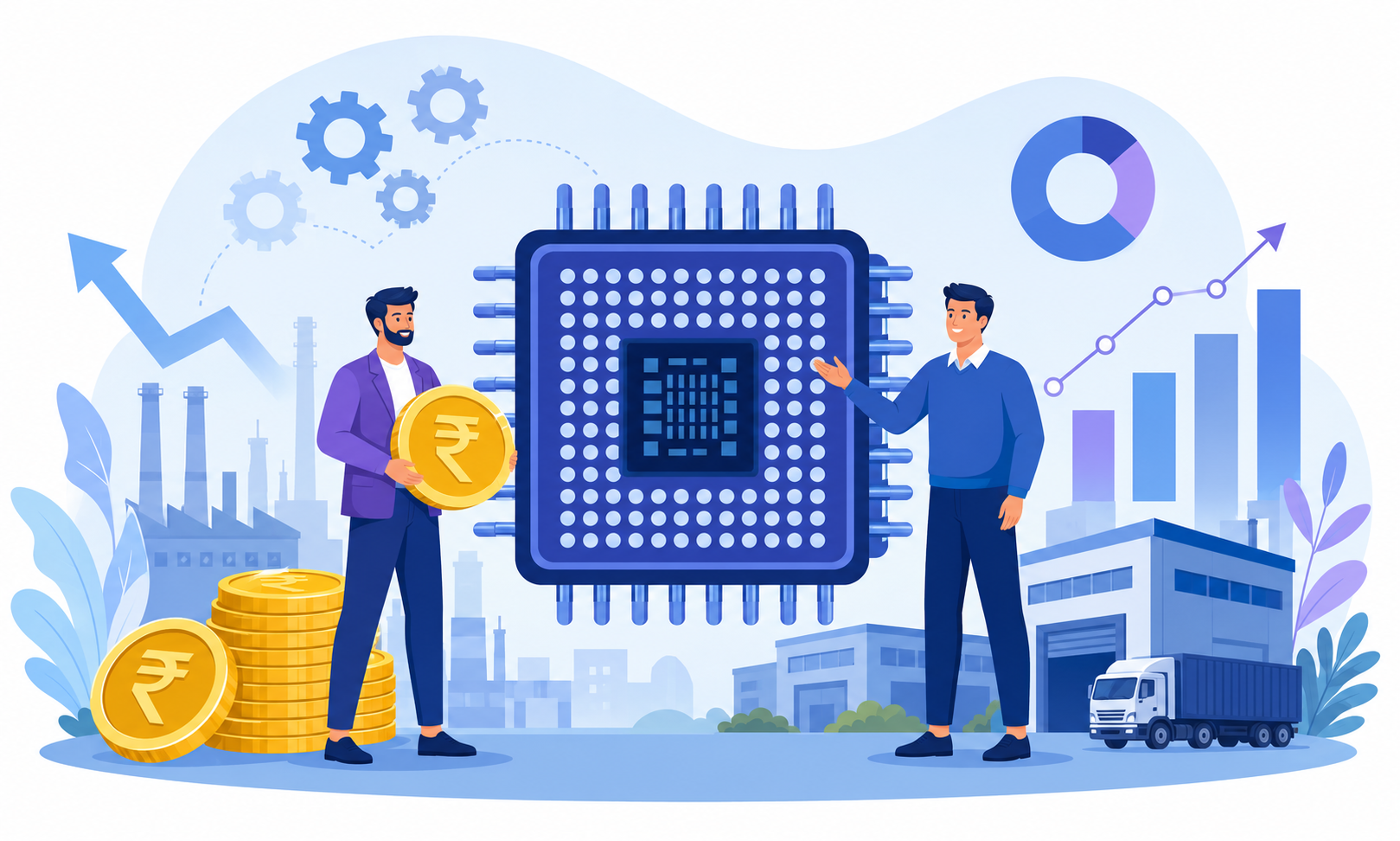
Relevant opportunities may include:
- Semiconductor ancillary units
- Ultra-high purity chemicals
- Ultra-high purity gases
- Electronics components
- Cleanroom-linked support services
- Precision manufacturing
- Testing, calibration and validation services
- Electronics waste recycling
This is a sector where ecosystem depth matters. Large anchor investments can create demand for suppliers, service providers, logistics support, utilities, environmental services, skilled manpower and specialised infrastructure.
For businesses, the critical question is not simply whether the sector is attractive. The more important question is whether the proposed project can meet the quality, reliability, compliance and customer approval requirements of a high-technology supply chain.
4. Critical Minerals, Metals, Ceramics and Industrial Inputs
The policy also identifies opportunities in sectors linked to industrial inputs and supply chain resilience. These include critical minerals, metals, ceramics, machinery and equipment.

Potential business opportunities include:
- Critical mineral processing
- Metal refining and extraction
- Ceramics and advanced material products
- Electrical machinery and equipment
- Telecom-related machinery
- Industrial machinery and components
These areas are closely linked with India’s broader manufacturing ambitions. As industries such as electronics, renewable energy, electric mobility, defence, infrastructure and industrial automation grow, the demand for reliable domestic input suppliers may increase.
Businesses evaluating these opportunities will need to carefully examine raw material security, technology access, environmental compliance, logistics cost, working capital intensity and end-user demand.
5. Recycling, Circular Economy and Environmental Infrastructure
Industrial expansion creates an equally important need for environmental infrastructure. The Viksit Gujarat Industrial Policy 2026 places emphasis on environmental stewardship, cleaner production, common infrastructure and sustainability-linked industrial development.
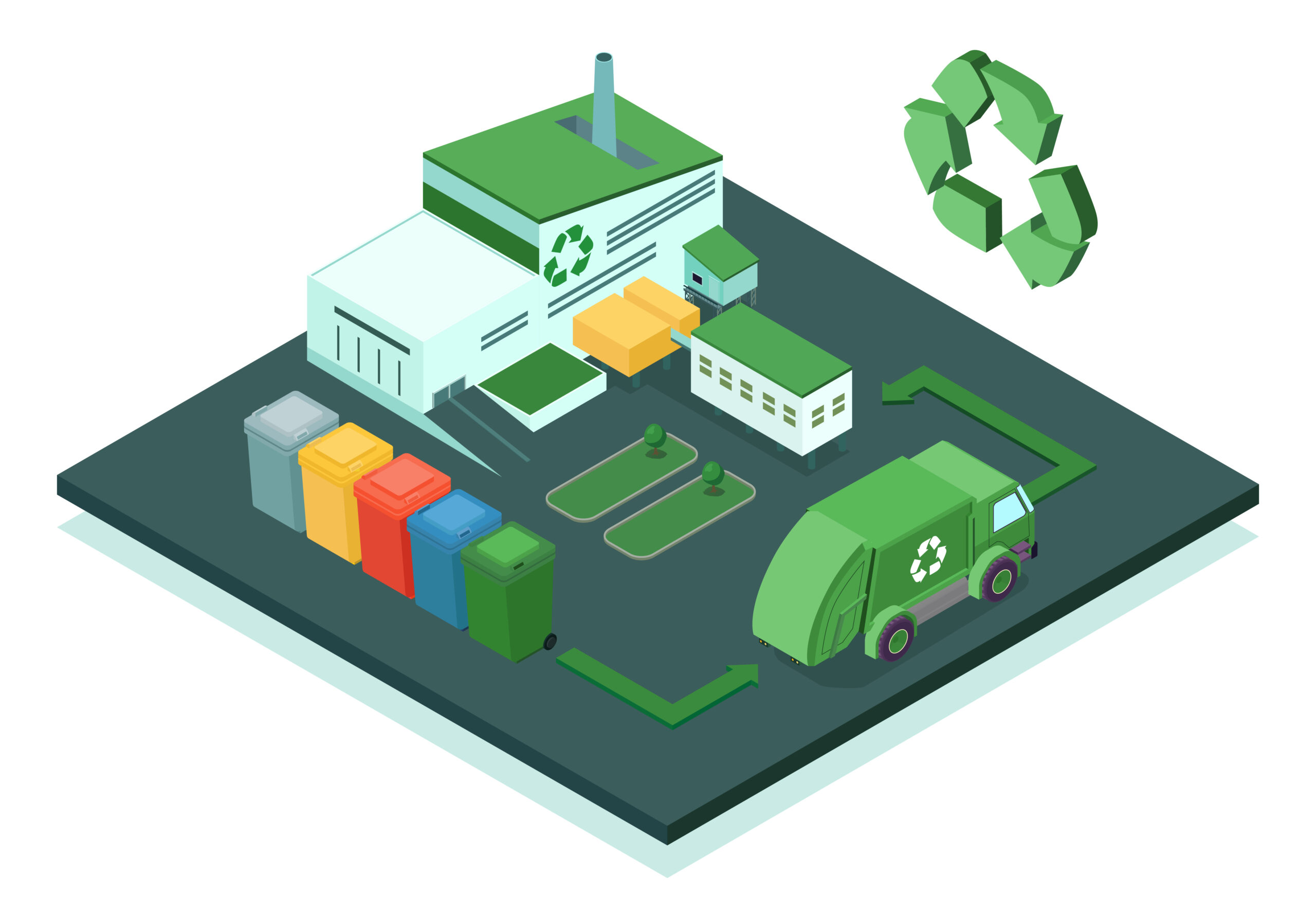
This may create opportunities in:
- Vehicle scrapping facilities
- Textile waste recycling
- Electronics waste recycling
- Municipal solid waste recycling equipment
- Municipal liquid waste recycling equipment
- Common Effluent Treatment Plants
- Zero Liquid Discharge systems
- Common boiler projects
- Cleaner production technology adoption
These opportunities are likely to be relevant both for standalone project developers and for industrial clusters requiring shared environmental infrastructure.
For investors, this space requires careful planning. Environmental infrastructure projects are often approval-intensive and depend on user demand, regulatory compliance, operating discipline, technology selection and long-term offtake or service arrangements.
6. Textiles, Apparel, Technical Textiles and Footwear
Gujarat has a long-standing textile and industrial manufacturing base. The policy’s emphasis on employment, MSMEs, industrial infrastructure, worker housing and regional development can create fresh opportunities in labour-intensive sectors.
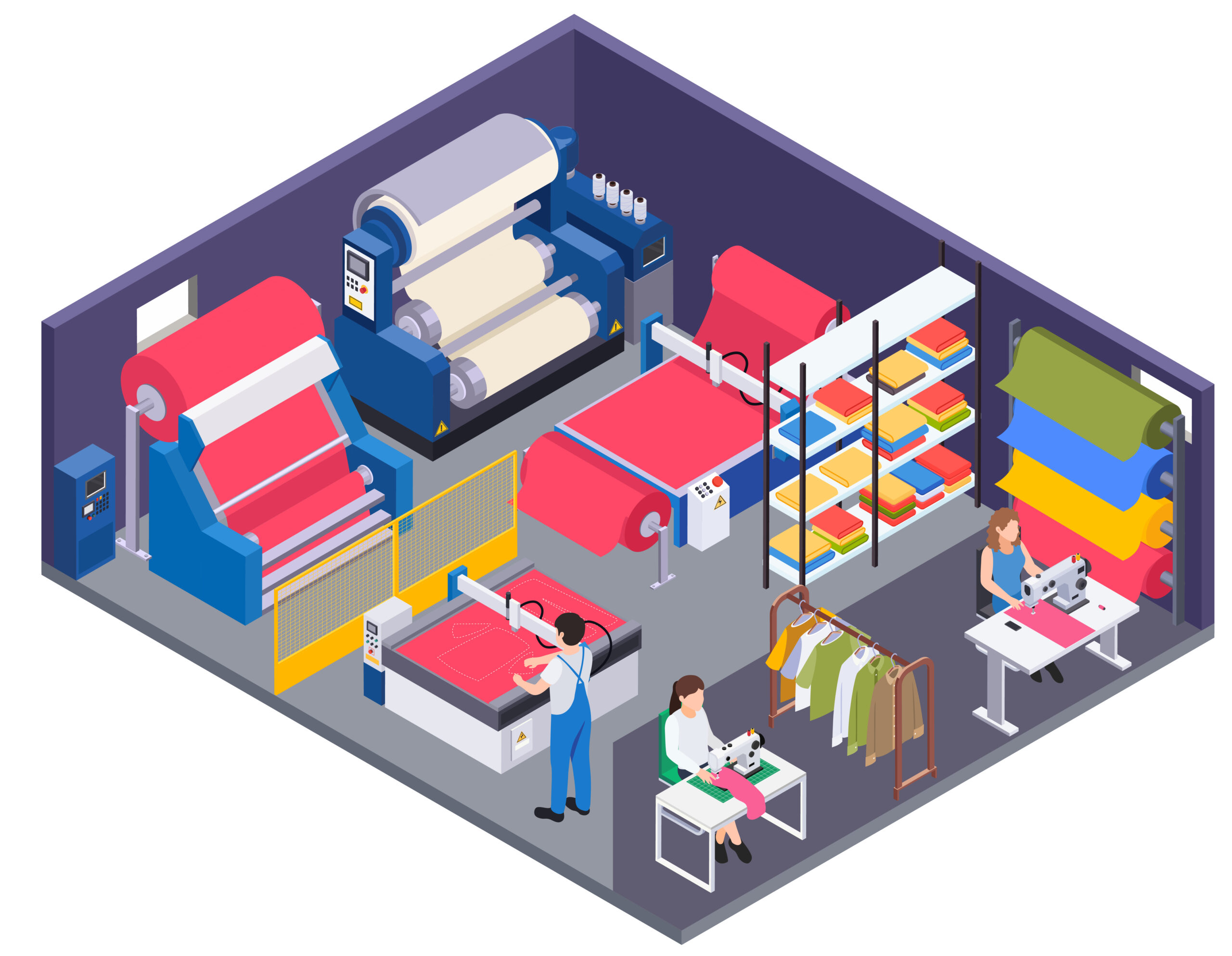
Potential opportunities may include:
- Textile manufacturing
- Technical textiles
- Apparel and garment manufacturing
- Footwear manufacturing
- Textile waste recycling
- Worker housing linked to manufacturing clusters
- Common facilities for textile processing and compliance
These sectors can be attractive where there is strong demand visibility, access to labour, suitable land, utilities, logistics connectivity and compliance infrastructure.
However, project viability will depend on product positioning, export competitiveness, labour productivity, working capital, power and utility costs, and the ability to meet buyer standards.
7. Agro Processing, Pharmaceuticals and Healthcare Manufacturing
The policy also creates scope for opportunities in sectors where Gujarat already has relevant industrial strengths, particularly pharmaceuticals, bulk drugs, APIs, medical devices and food processing.

Relevant opportunities include:
- Agro and food processing units
- Bulk drug manufacturing
- API manufacturing
- Key starting material production
- Medical devices
- Pharmaceutical ancillary units
- Healthcare-linked manufacturing and services
These sectors benefit from a combination of existing industrial clusters, technical talent, logistics infrastructure and policy support. However, they also require strong regulatory compliance, quality systems, process control and market access.
For businesses, feasibility assessment should include raw material sourcing, technology selection, regulatory approvals, environmental compliance, customer validation, pricing dynamics and export potential.
8. Industrial Parks, Worker Housing and Plug-and-Play Infrastructure
A major business opportunity arising from industrial policy is not only in manufacturing units, but also in the infrastructure required to support them.
The policy document refers to industrial infrastructure, land banks, GIDC estates, private industrial parks, worker housing and facilities that can improve ease of industrial operations. Gujarat already has more than 239 industrial estates and the policy seeks to further strengthen industrial infrastructure.

This can create opportunities in:
- Private industrial parks
- Green industrial parks
- Industrial land development
- Plug-and-play manufacturing facilities
- Warehousing and logistics parks
- Worker housing and dormitories
- Working women’s hostels
- Common utilities and shared industrial infrastructure
These opportunities can be particularly relevant where industrial growth is expected around existing or upcoming clusters, ports, freight corridors, renewable energy zones and regional development nodes.
The commercial success of such projects will depend on location, land title, infrastructure availability, anchor demand, leasing model, regulatory permissions and long-term occupancy.
9. Startups, R&D Centres and Innovation Infrastructure
The policy also recognises the importance of startups, innovation, research and development. This creates opportunities beyond conventional manufacturing.
Potential business opportunities include:
- Deep-tech startups
- Green-tech ventures
- Biotechnology startups
- Industrial technology startups
- R&D centres
- Testing laboratories
- Prototyping centres
- Patent-led technology ventures
- Technology commercialisation platforms
This is an important shift. It suggests that Gujarat’s industrial policy is not only focused on factories and physical assets, but also on knowledge, technology, intellectual property and innovation-led enterprise creation.
For startups and technology ventures, the key will be to connect innovation with commercial demand. Policy support can help, but business viability will depend on customer adoption, scalability, funding, technical validation and market entry strategy.
10. Services Sector Opportunities Around Industrial Growth
Industrial expansion also creates demand for services. The policy document includes a section on the growth of the services sector, indicating that Gujarat’s development strategy is not confined to manufacturing alone.
New opportunities may emerge in:
- Logistics and supply chain services
- IT and IT-enabled services
- Financial services
- Skill development and training
- Healthcare services
- Education and workforce development
- Tourism and hospitality linked to regional growth
- Compliance, advisory and project support services
As manufacturing clusters expand, businesses require financing, logistics, manpower, compliance, market access, digital systems, technical services and professional advisory. This creates a wider services ecosystem around industrial growth.
| Planning to evaluate a project opportunity under the Viksit Gujarat Industrial Policy 2026? Before committing capital, selecting land, finalizing capacity or applying for incentives, it is important to assess commercial viability, policy eligibility, market demand, infrastructure readiness, financial feasibility and execution risks. Hmsa Consultancy Services supports clients through feasibility studies, detailed project reports, market assessments, business plans, financial models and strategic advisory for investment-linked decisions. Businesses evaluating manufacturing, infrastructure, energy, recycling, logistics, industrial park, MSME or services sector opportunities in Gujarat may benefit from a structured assessment before moving into execution. Reach out to us for evaluating a new business opportunity, click here. |
What Businesses Should Evaluate Before Entering These Opportunities
The Viksit Gujarat Industrial Policy 2026 can create a favourable environment for new projects. However, policy support alone does not make a project commercially viable.
Before committing capital, businesses should evaluate:
- Whether the proposed activity is eligible under the relevant policy category
- Whether the location is suitable from land, logistics, utilities and approval perspectives
- Whether sufficient market demand exists
- Whether customers are ready to accept the proposed product or service
- Whether the project has a competitive cost structure
- Whether the technology is proven and commercially scalable
- Whether environmental and regulatory approvals are achievable
- Whether the project is bankable
- Whether incentives are material enough to improve project returns
- Whether implementation risks are manageable
This evaluation is particularly important in emerging sectors such as green hydrogen, battery storage, semiconductor ancillaries, drones, advanced materials and recycling, where policy interest may be strong but commercial models are still evolving.
How Hmsa Consultancy Services Can Support
Hmsa Consultancy Services can support businesses evaluating opportunities under the Viksit Gujarat Industrial Policy 2026 through a structured advisory approach.
Our support can include:
- Sector opportunity assessment
- Feasibility studies for new projects
- Detailed project reports for financing, internal approval and investment evaluation
- Market demand assessment
- Policy and incentive eligibility review
- Location and infrastructure assessment
- Business model evaluation
- Financial feasibility and project viability analysis
- Risk assessment and mitigation planning
- Strategic advisory for diversification, market entry and project structuring
For projects linked to manufacturing, clean energy, industrial parks, warehousing, recycling, advanced materials, MSMEs, services or infrastructure, a structured feasibility exercise can help businesses move from policy interest to investment-ready decision-making.
Conclusion
The Viksit Gujarat Industrial Policy 2026 has the potential to create business opportunities across green energy, battery storage, hydrogen, electronics, semiconductor ancillaries, mobility, textiles, pharmaceuticals, agro processing, recycling, industrial parks, worker housing, startups, R&D and services.
However, the real opportunity will not lie merely in identifying sectors mentioned in the policy. It will lie in selecting the right project, choosing the right location, validating demand, assessing eligibility, structuring the business model and understanding implementation risks before committing capital.
For businesses evaluating Gujarat as an investment destination, the policy provides a strong enabling framework. The next step is to convert that framework into a practical, commercially viable and execution-ready project plan.